CASE STUDY
Smart School Bus Routing System for Efficient and Real-Time Tracking
How Atomic Build delivered a custom school bus routing system for Veza's specialized schedules, accessibility needs, and operations.
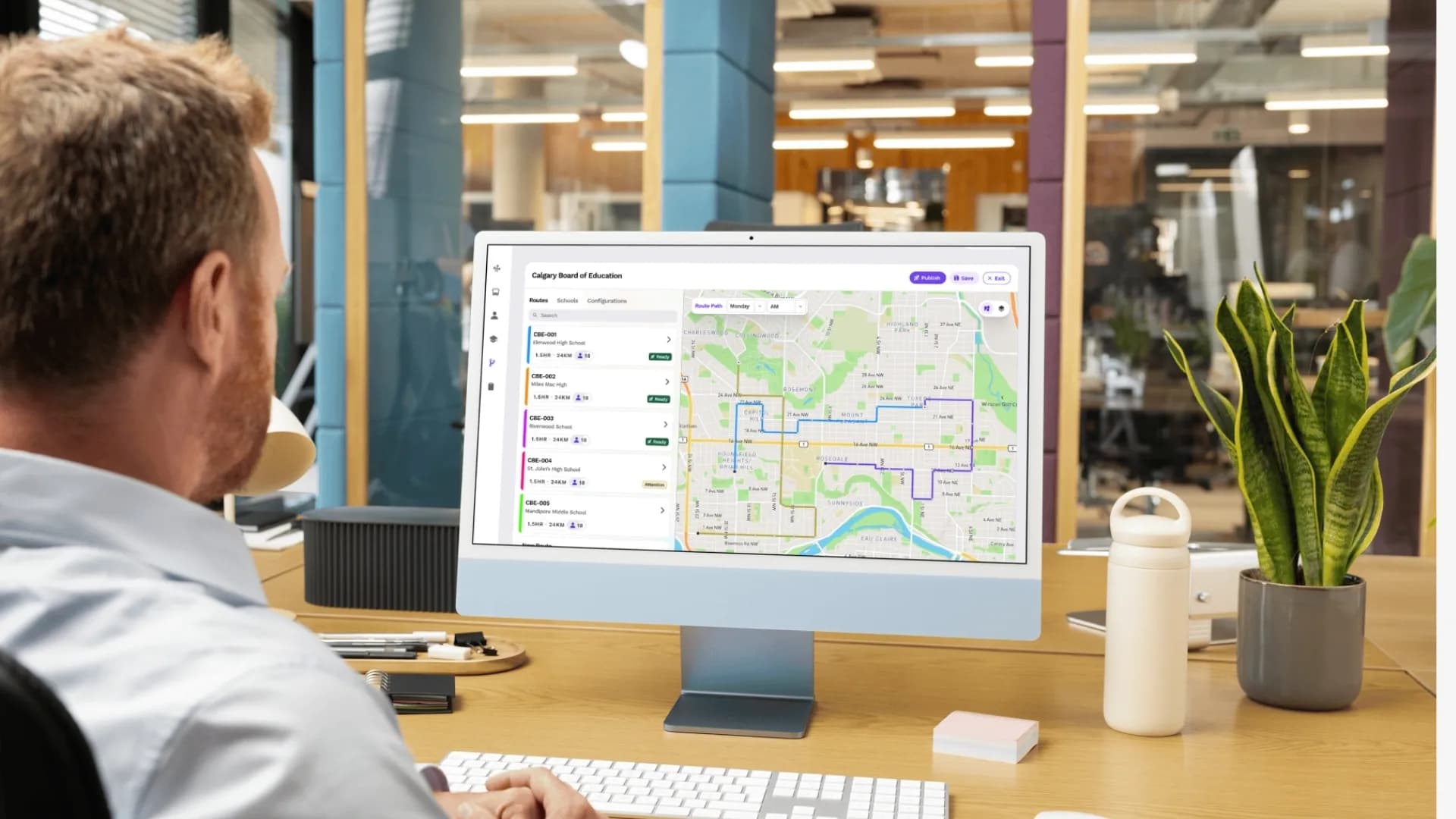
At a glance
Project snapshot
How Atomic Build delivered a custom school bus routing system for Veza's specialized schedules, accessibility needs, and operations.
- Industry
- Student transportation
- Product
- Custom Bus Routing System
- Atomic Build's role
- Custom product delivery, routing-system architecture, and cloud and data workflow engineering.
Impact
Increased in Operational Efficiency
Streamlined processes allowed for better route management, optimized resource use, and faster response times.Improved Business Agility
Enabled Veza to quickly adapt to changing transportation demands and expand into new markets.Improved Reliability
Consistent, on-time service boosted satisfaction for families and staff.Platform
- Azure
- Firebase
Expertise
- Infrastructure Development
- Live Tracking
- Mobile App Development
- Authentication
Related services
Business problem
Project context
Constraints and goals
Diverse Student Needs
Students required specialized care, such as wheelchair accessibility or medical supervision, which traditional systems couldn't accommodate.
Safety and Compliance
Strict regulations demanded curbside pickups, accessible vehicles, and secure seating, requiring constant monitoring and training.
Dynamic Needs
Frequent changes in schedules, enrollments, and transportation demands overwhelmed their previous system.
High Operational Costs
Inefficient routing led to wasted fuel, underutilized vehicles, and increased staffing expenses.
Solution delivered
Atomic Build delivered a custom routing system tailored to Veza's needs, featuring:
Optimized Routes
Smart algorithms reduced travel times, cut fuel costs, and maximized vehicle use.
Safety-First Design
Curbside pickups, wheelchair-accessible vehicles, and real-time monitoring ensured compliance and student safety.
Real-Time Adaptability
The system adjusted instantly to new enrollments, schedule changes, or last-minute updates.
User-Friendly Interface
Non-technical staff could easily manage routes, make adjustments, and monitor operations.
Scalable Growth
Built to expand with Veza, handling more students, vehicles, and service areas seamlessly.
Technical approach
To address Veza's need for a cost-effective, reliable, and scalable school bus tracking system, Atomic Build adopted a technology-driven approach, leveraging advanced routing algorithms, cloud-native architectures, and dynamic data processing workflows. Our approach showcases our technical prowess while maintaining the confidentiality of proprietary solution details.
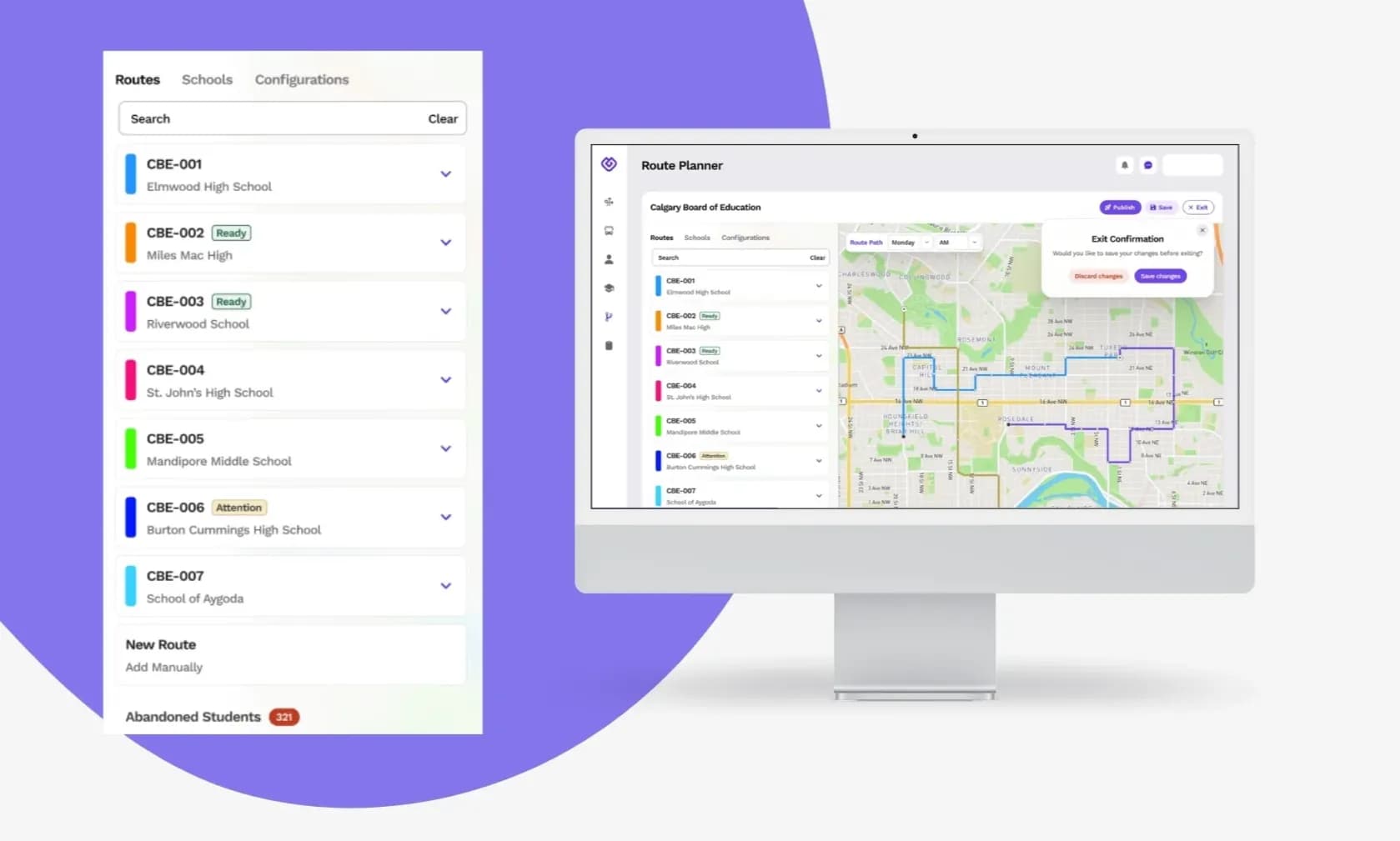
Route planner dashboard
System Architecture and Design
Our architecture centered around cloud-native solutions, utilizing Microsoft Azure Logic Apps and Azure Functions to construct a highly modular, scalable backend infrastructure. This microservices-based architecture enabled seamless orchestration of data flows, high fault tolerance, and rapid scalability.
Azure Logic Apps
Served as the orchestration layer, facilitating event-driven workflows with low-code connectors for third-party integrations. Its serverless nature reduced overhead, ensured continuous availability, and accelerated deployment timelines.
Azure Functions
Enabled stateless, event-triggered microservices, optimizing computational resources with auto-scaling based on workload demand. This provided cost-effective, high-performance processing for complex routing logic and data transformation tasks.
Choosing Azure aligned with Veza's existing cloud environment, enhancing system interoperability, security compliance, and infrastructure consistency.
Advanced Routing and Optimization
We integrated a third-party vehicle routing API, selected for its superior routing capabilities, to optimize multi-constraint logistics without exposing proprietary algorithms:
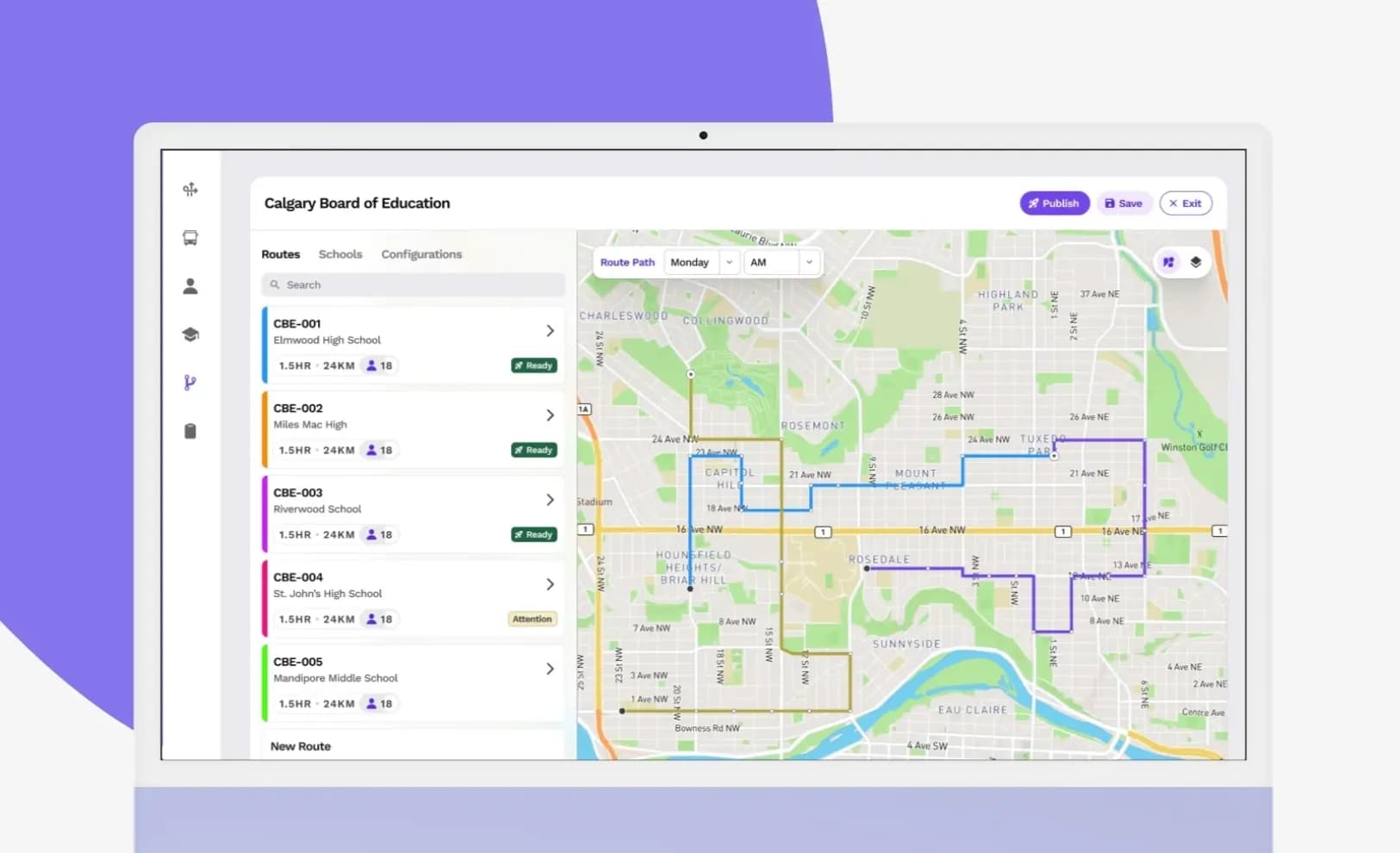
Route planner dashboard
Asynchronous High-Capacity Processing
Managed up to 20,000 stops concurrently, leveraging distributed computing principles for large-scale route optimization.
Constraint-Based Routing Algorithms
Incorporated multi-dimensional constraints such as vehicle capacity, time windows, paired stops, curbside pickups, and dwell time, ensuring route efficiency and regulatory compliance.
Dynamic Optimization Engine
Utilized heuristic and metaheuristic algorithms (e.g., Tabu Search, Genetic Algorithms) to continuously improve routing efficiency based on real-time data inputs.
Cost-Effective Scalability
Achieved optimized cost per transaction, supporting Veza's growth trajectory without exponential cost increases.
Intelligent Resource Allocation
We implemented sophisticated resource allocation strategies grounded in operational research and combinatorial optimization:
Geospatial Analysis for Smart Start Locations
Applied proximity algorithms and Voronoi diagram-based clustering to determine optimal route initiation points, minimizing deadhead miles.
Driver Assignment Algorithms
Leveraged constraint satisfaction models, factoring driver qualifications, vehicle compatibility, and geographical proximity for optimal route-driver pairing.
Staff Routing Integration
Embedded multi-modal routing algorithms to synchronize staff schedules with student transport, optimizing resource utilization.
Student-Centric Features
Our system prioritized student safety and comfort through advanced routing heuristics:
Curbside Geofencing
Employed geospatial APIs to automate safe pick-up/drop-off locations, reducing pedestrian risk exposure.
Dwell Time Predictive Modeling
Used statistical regression models to predict optimal dwell times, enhancing punctuality and minimizing route delays.
Travel Time Constraints
Integrated real-time traffic data with predictive analytics to enforce maximum ride duration policies.
Scalability and Maintainability
The architecture was engineered for horizontal scalability and low operational overhead:
Auto-Scaling Infrastructure
Leveraged Azure's autoscaling capabilities, dynamically adjusting computational resources to meet fluctuating demand.
Infrastructure as Code (IaC)
Utilized ARM templates and Terraform for automated deployment, ensuring consistency across development, staging, and production environments.
Minimal Maintenance Footprint
Adopted DevOps best practices, CI/CD pipelines, and automated monitoring tools to reduce manual intervention and improve system resilience.
Reported outcomes
These qualitative outcomes come from the approved project record. No additional measurements have been inferred.
Increased in Operational Efficiency
Streamlined processes allowed for better route management, optimized resource use, and faster response times.
Improved Business Agility
Enabled Veza to quickly adapt to changing transportation demands and expand into new markets.
Improved Reliability
Consistent, on-time service boosted satisfaction for families and staff.
Client perspective

“Atomic Build didn't just provide a solution—they became true partners. Their ability to combine technical expertise with a deep understanding of our mission made all the difference. Today, our operations are safer, more efficient, and more student-focused than ever.”
Tim Watson
Head of Product
Related services
Capabilities used in this kind of work.
Software Architecture
Make practical system, data, integration, and delivery decisions for a new product, a scaling platform, or modernization work.
Explore service →Forward-Deployed Engineering
Embed a senior product and engineering team that works in your real constraints and owns the path from decision to production.
Explore service →Your product could be next.
Every engagement starts with Sprint0 — we define what to build and then we ship it.