CASE STUDY
Real-Time School Bus Tracking for Safer Student Transport
How Atomic Build developed a real-time school bus tracking application that gives Veza families clear progress visibility.
At a glance
Project snapshot
How Atomic Build developed a real-time school bus tracking application that gives Veza families clear progress visibility.
- Industry
- Student transportation
- Product
- Real-Time School Bus Tracking App
- Atomic Build's role
- Product design and engineering for a real-time school bus tracking application.
Impact
Cost Efficiency
Eliminated third-party API fees, making operations more sustainable.Operational Optimization
Reduced manual coordination and support inquiries with real-time tracking.Enhanced Reliability
With more accurate tracking and fewer parent inquiries, Veza can now focus on scaling its services and ensuring top-quality transportation.Platform
- Azure
- Firebase
Expertise
- Infrastructure Development
- Live Tracking
- Mobile App Development
- Authentication
Related services
Business problem
Project context
Constraints and goals
Lack of Real-Time Tracking
Parents were often left uncertain about their child's bus location, leading to anxiety and inconvenience.
High Costs of Mapping Services
Existing solutions relied on third-party mapping services that incurred ongoing costs, making them unsustainable.
User-Friendly Requirement
The system needed to be accessible to non-technical users, such as parents and school administrators.
Accuracy and Reliability
Any tracking system had to provide precise location updates without delays.
Solution delivered
Atomic Build developed a real-time school bus tracking system that:
Enabled Real-Time Bus Tracking
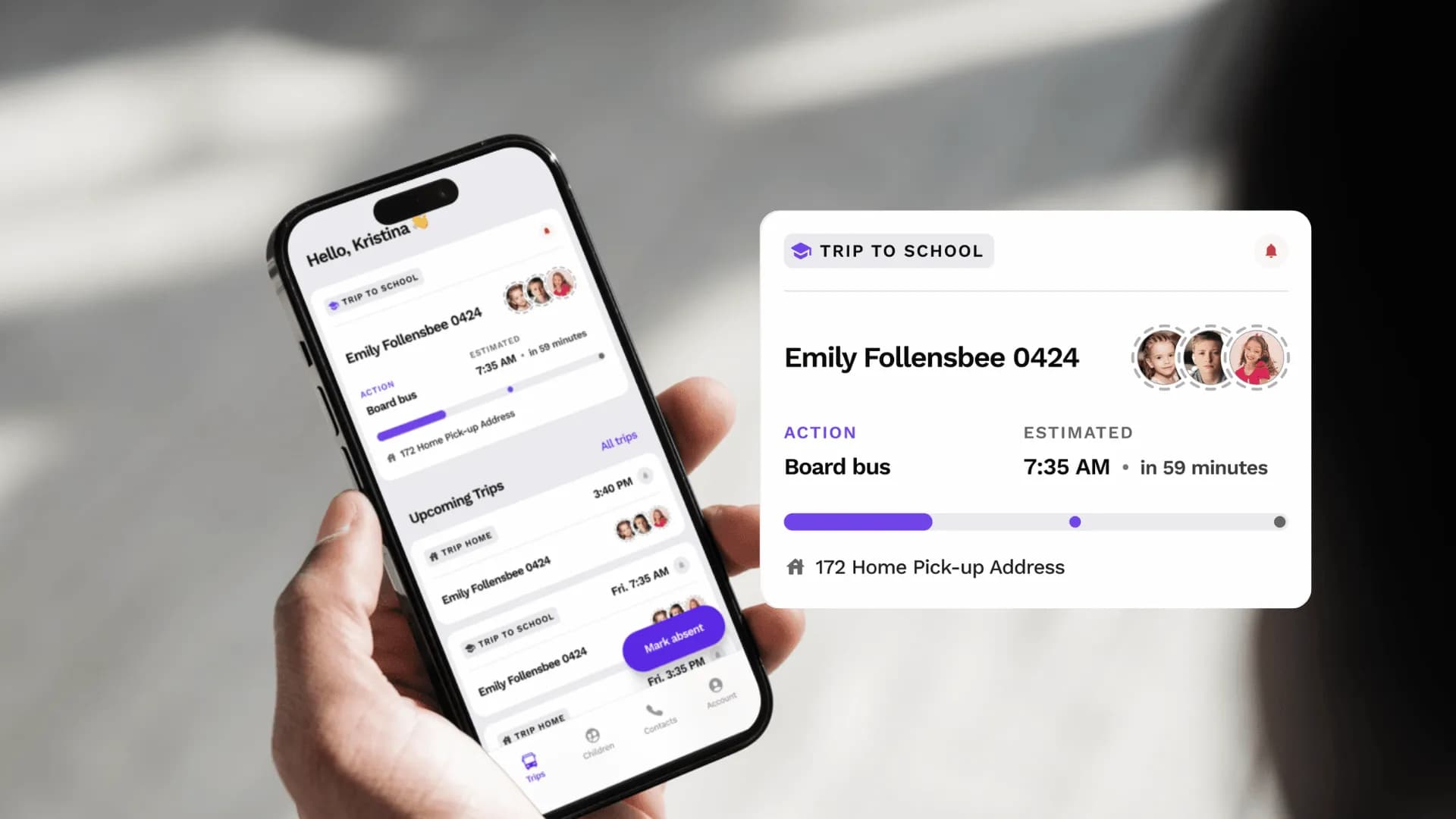
Allowed parents to see their child's bus progress from the starting point to their home and then to the school.
Implemented a Simple Progress Bar Interface
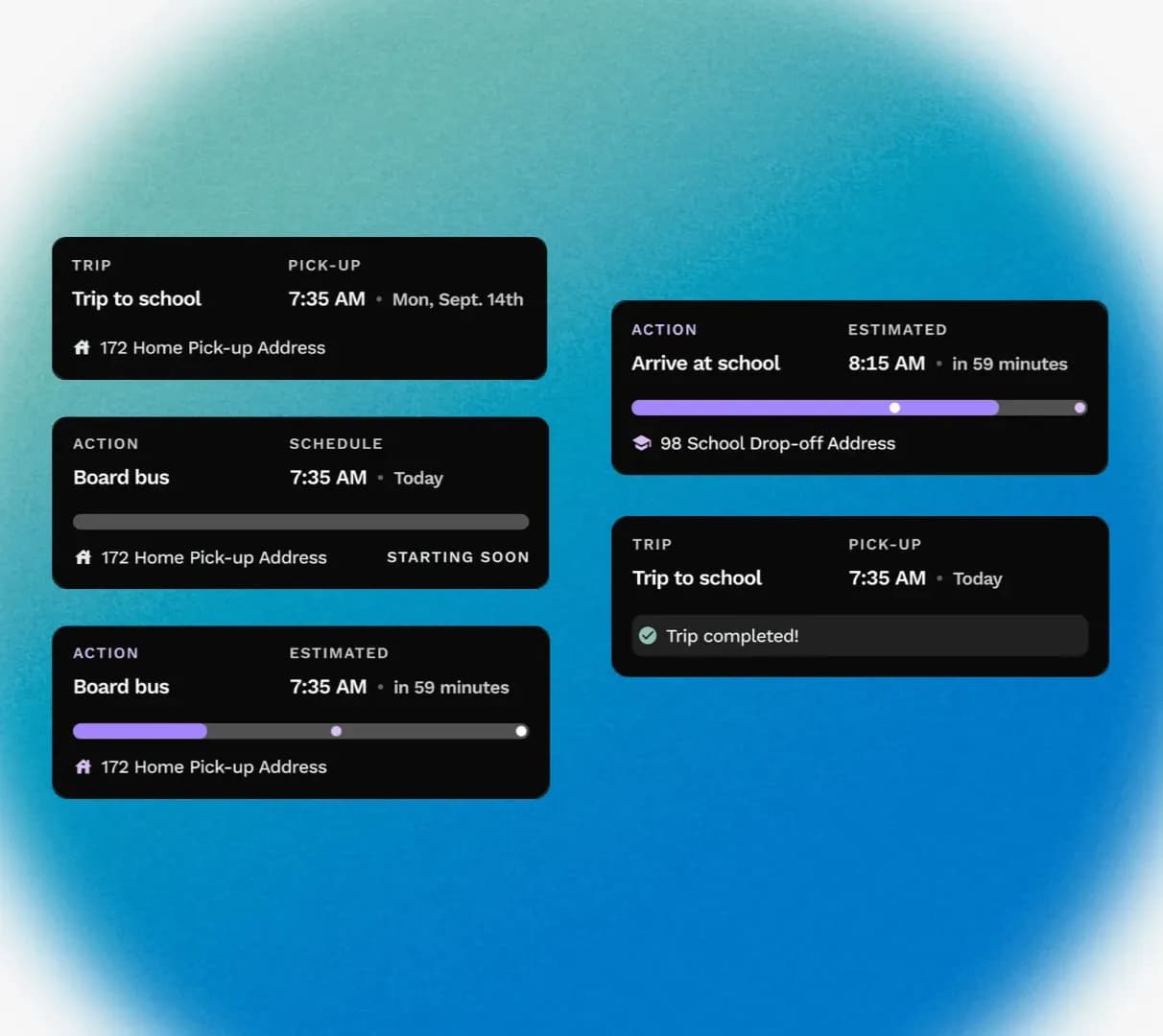
A visual representation of the bus's journey, making it easy for parents to understand the bus's location at a glance.
Optimized for Cost Efficiency
Avoided recurring mapping fees by leveraging a cost-effective alternative without compromising accuracy.
Designed for Scalability
Ensured that the solution could grow with Veza's expanding operations.
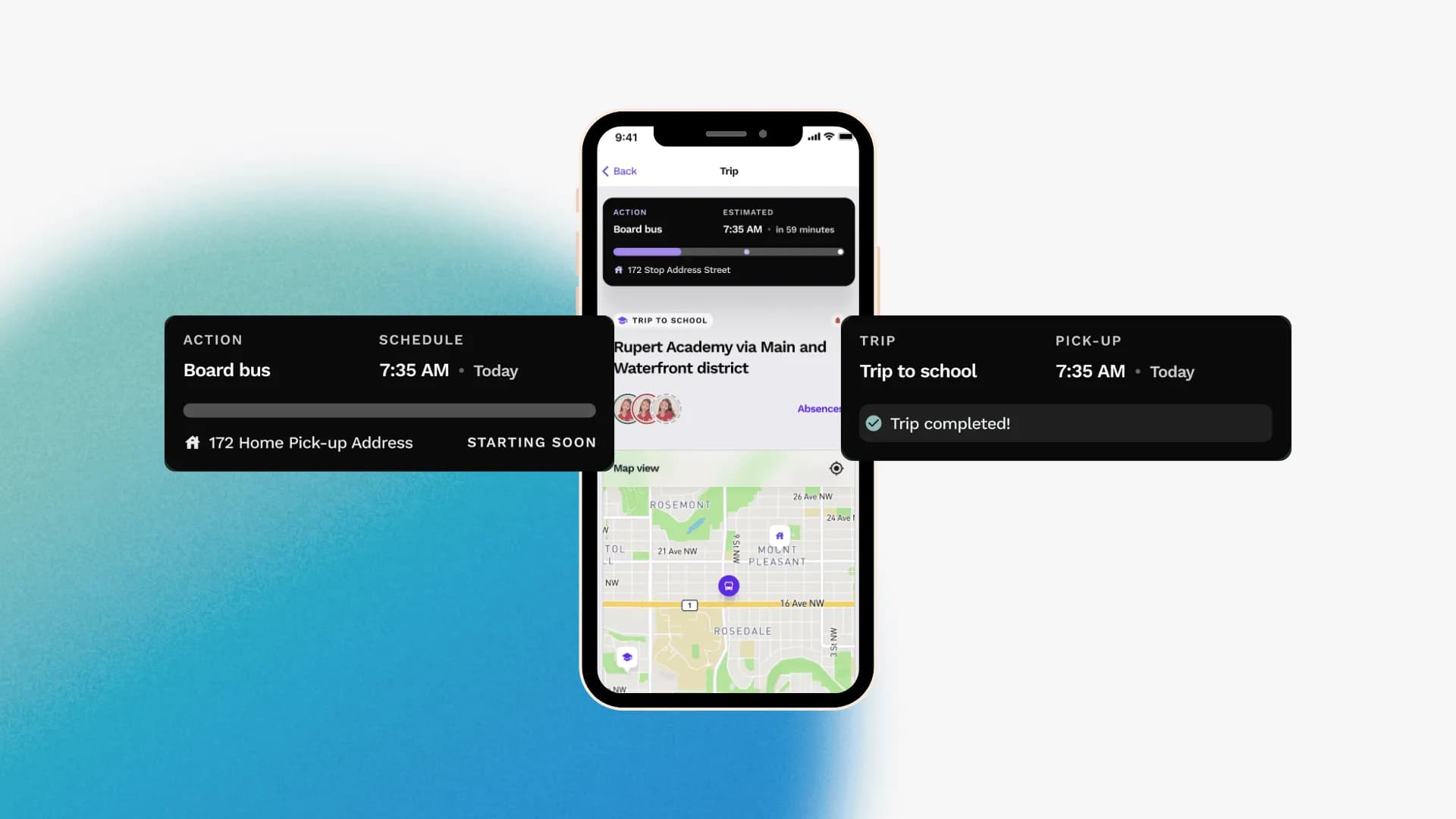
Real-time bus tracker
Technical approach
Our primary objective was to create a system that could accurately translate the bus's live GPS data into a visual progress indicator while maintaining performance, scalability, and cost efficiency. Instead of relying on third-party mapping services like Google Maps' Distance Matrix API, we implemented a custom distance calculation approach using the geolib library. This allowed us to compute distances efficiently while avoiding recurring API costs.
Tracker detail
Accurate Distance Calculation & Performance Optimization
We employed the Haversine formula, a formula used to calculate the great-circle distance between two points, optimized for fast geospatial distance computation, to determine the precise distances between key points (bus yard, student's home, and school). This lightweight, in-house method provided accurate calculations while significantly reducing processing overhead. Additionally, we implemented caching mechanisms to store frequently used distance calculations, improving efficiency in real-time tracking scenarios.
Segmenting Non-Linear Routes
Recognizing that school bus routes are rarely straight, we segmented the journey into key milestones. Each segment was mapped individually, ensuring accuracy even when dealing with curved roads and multiple drop-off points.
Yard to Home
Calculates the bus's progress toward the pickup location.
Home to School
Updates dynamically once the student is picked up, tracking progress toward the school(s).
Each segment was mapped individually, ensuring accuracy even when dealing with curved roads and multiple drop-off points.
Real-Time Data Integration & Error Handling
The system processes GPS updates every few seconds, ensuring continuous and reliable tracking. However, GPS signals can be inconsistent due to environmental factors. To address this, we implemented filtering techniques such as moving averages and Kalman filters to smooth fluctuations, reducing erratic location jumps while maintaining real-time responsiveness.
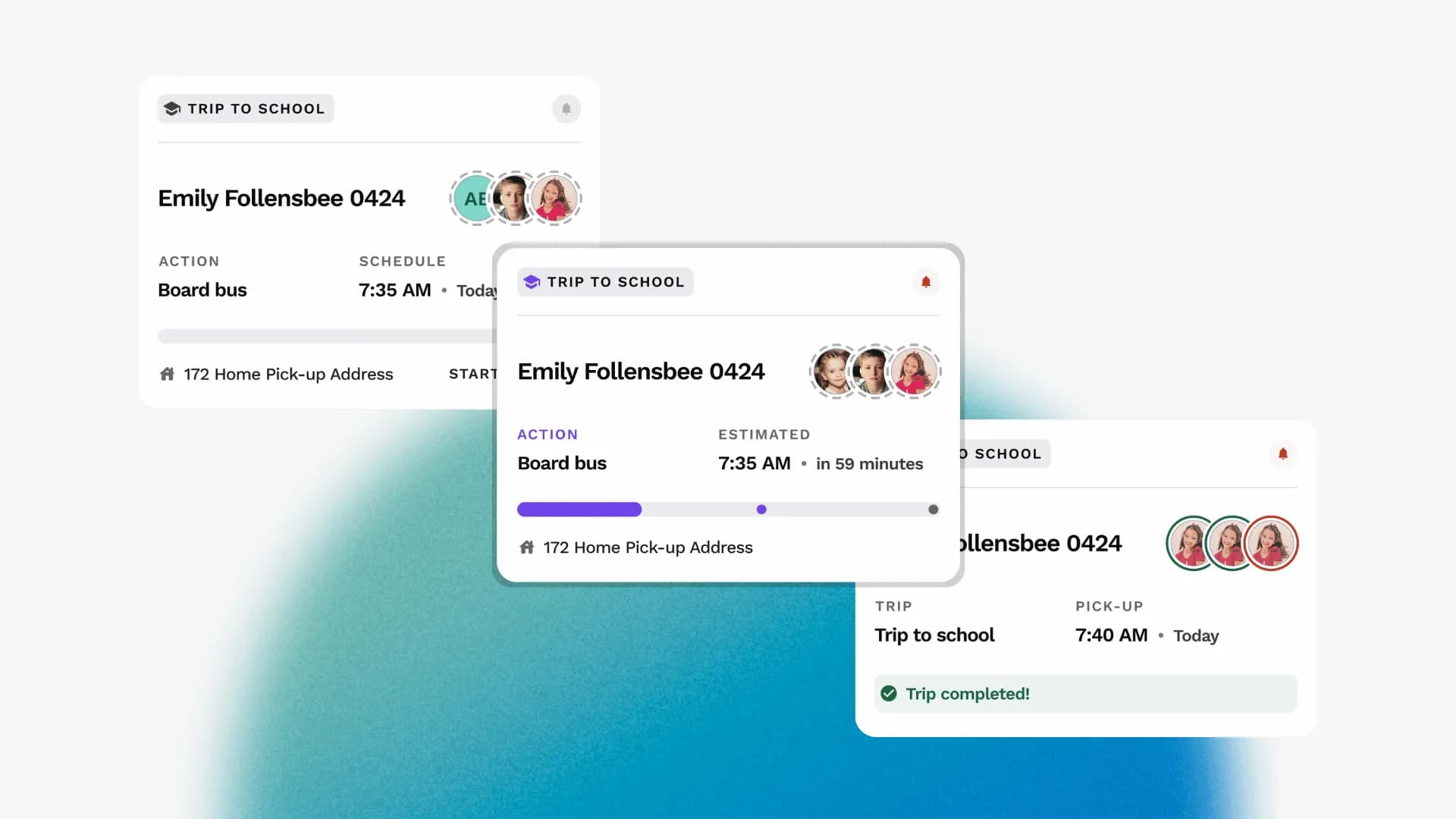
Tracker detail
Modular and Scalable Design
We designed the system with a modular architecture, enabling easy scaling as additional routes and buses are added. The architecture supports asynchronous data processing to handle increased data loads efficiently, ensuring that performance remains optimal even as the number of tracked buses grows.
Overcoming Technical Challenges
GPS Variability
Applied intelligent smoothing algorithms to ensure stable tracking despite environmental inconsistencies.
Complex Route Dynamics
Utilized advanced path analysis techniques to maintain accurate tracking across diverse geographies.
Resource Optimization
Engineered lightweight, efficient solutions to deliver high performance with minimal computational load.
Reported outcomes
These qualitative outcomes come from the approved project record. No additional measurements have been inferred.
Cost Efficiency
Eliminated third-party API fees, making operations more sustainable.
Operational Optimization
Reduced manual coordination and support inquiries with real-time tracking.
Enhanced Reliability
With more accurate tracking and fewer parent inquiries, Veza can now focus on scaling its services and ensuring top-quality transportation.
Simple, User-Friendly Interface
Made it easy for parents and school staff to monitor bus progress.
Client perspective

“Atomic Build delivered exactly what we needed—an intuitive, real-time bus tracking system that parents love. Their expertise in building cost-effective, reliable solutions helped us provide a better experience for families without incurring unnecessary costs.”
Robyn Palmer
Customer Success Lead
Related services
Capabilities used in this kind of work.
Your product could be next.
Every engagement starts with Sprint0 — we define what to build and then we ship it.