
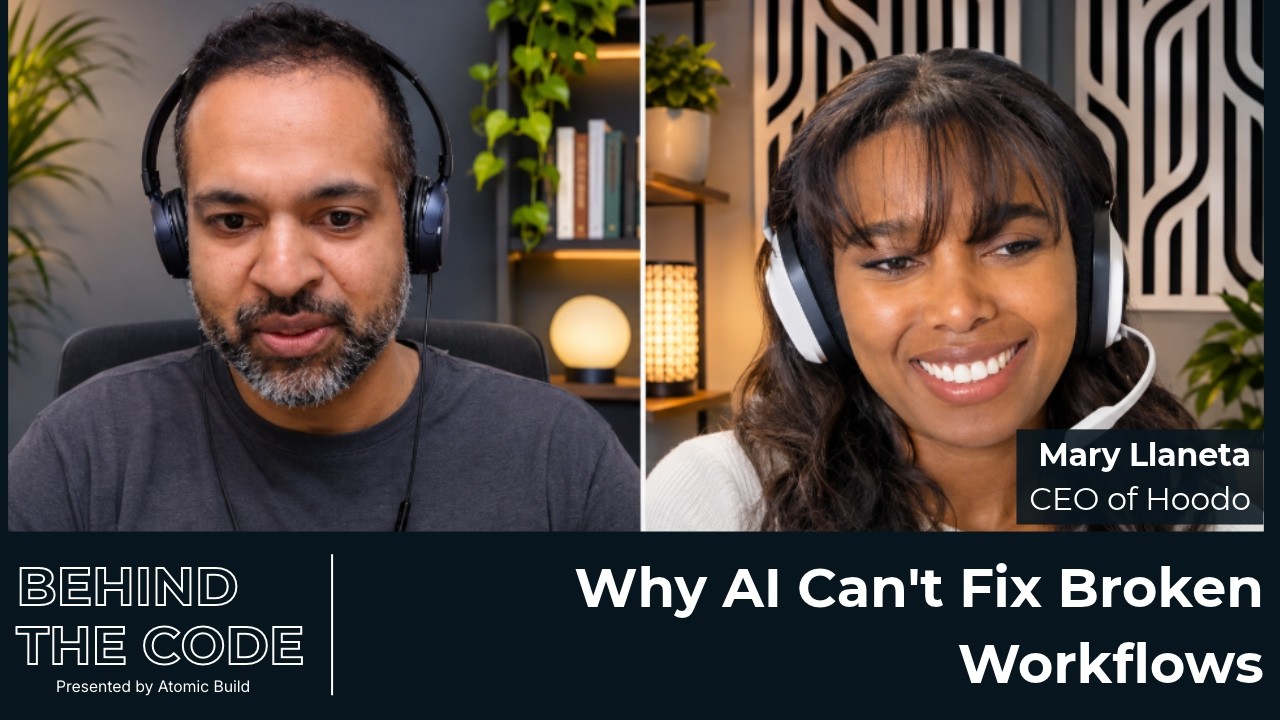
Why AI Can't Fix Broken Workflows | Mary Llaneta, CEO of Hoodo
Summary
Amit talks with Mary, co-founder of Hudoo, a workflow operations system for blue-collar industries like automotive dealerships and property management. After spending 15 years working as a nurse and in occupational health, Mary explains how healthcare's focus on safeguards, accountability, and documentation shaped the way she builds software for businesses that still rely on emails and spreadsheets. They discuss why most operational problems need simple, well-defined processes rather than sophisticated AI, where automation ends and AI can genuinely help, and what she learned from taking Hudoo from Calgary to larger markets. Mary also shares her inbound-first growth strategy using social video ads, why she prefers working with owner-operators, how leadership sets the standard for quality in the age of AI, and some personal habits and influences in a closing rapid-fire round.
Transcript
Behind the co.
Behind the co. [singing]
Behind the co. [singing] That's where the [music] future grows.
That's where the [music] future grows. Welcome to behind the code brought to
Welcome to behind the code brought to you by Atomic Build. I'm Amit and with
you by Atomic Build. I'm Amit and with me today I have Mary from Hudoo. Mary,
me today I have Mary from Hudoo. Mary, super excited for our conversation
super excited for our conversation today. Thank you for joining me. And if
today. Thank you for joining me. And if you could uh if you'd give a quick
you could uh if you'd give a quick introduction about yourself, that would
introduction about yourself, that would be much appreciated.
be much appreciated. Hey EMTT, thanks for having me. Um my
Hey EMTT, thanks for having me. Um my name is Mary. I am the co-founder of
name is Mary. I am the co-founder of Hudoo and we are a workflow operational
Hudoo and we are a workflow operational system. We build workflows for mainly
system. We build workflows for mainly blue collar industries, smallmedium
blue collar industries, smallmedium businesses and owned still by operators.
businesses and owned still by operators. My background is in nursing. I used to
My background is in nursing. I used to be a nurse for 15 years and somehow that
be a nurse for 15 years and somehow that journey took me into building automation
journey took me into building automation software um basically through COVID cuz
software um basically through COVID cuz I was asked to build an automation
I was asked to build an automation software for one of the companies that I
software for one of the companies that I was working for with during COVID to
was working for with during COVID to track of all the cases and I kind of
track of all the cases and I kind of realized that I loved this type of work
realized that I loved this type of work and that's why I am a tech founder now.
and that's why I am a tech founder now. That's very cool. So some of the
That's very cool. So some of the automations you're building out through
automations you're building out through like maybe manual algorithms and keeping
like maybe manual algorithms and keeping in your head now you're building through
in your head now you're building through software.
software. Mhm.
Mhm. So Mary you spent uh balance of your
So Mary you spent uh balance of your career in nursing and occupational
career in nursing and occupational health. Um in those environments like
health. Um in those environments like processes and handouts there's a lot of
processes and handouts there's a lot of real consequences that happen. Um what
real consequences that happen. Um what did that teach you when organizations or
did that teach you when organizations or system break down? So in healthcare, I
system break down? So in healthcare, I think one of the biggest things that
think one of the biggest things that people might find interesting about
people might find interesting about healthcare is that it's not it's really
healthcare is that it's not it's really operationally advanced and
operationally advanced and technologically advanced. And I when I
technologically advanced. And I when I worked in healthcare, I didn't realize
worked in healthcare, I didn't realize how advanced it was until I left it. And
how advanced it was until I left it. And I spent years like working in acute care
I spent years like working in acute care and we had so many built-in operational
and we had so many built-in operational systems that I probably opened my email
systems that I probably opened my email like once a month. And usually it was
like once a month. And usually it was just for like corporate communications
just for like corporate communications or it's like something very
or it's like something very administrative. None of like the actual
administrative. None of like the actual work happens through email. And then
work happens through email. And then when I left healthcare, especially acute
when I left healthcare, especially acute care and moved into industry, um I saw
care and moved into industry, um I saw how businesses operated and I kind of
how businesses operated and I kind of realized there that there's not that
realized there that there's not that kind of operational maturity that you
kind of operational maturity that you see in healthcare in a lot of other
see in healthcare in a lot of other industries. And that was kind of the
industries. And that was kind of the opportunity that that we saw. Um like if
opportunity that that we saw. Um like if you imagine a hospital if it kind of ran
you imagine a hospital if it kind of ran the way a lot of businesses run it
the way a lot of businesses run it probably a lot of errors would happen I
probably a lot of errors would happen I would say and uh that's kind of what I
would say and uh that's kind of what I saw is leaving it that a number of
saw is leaving it that a number of businesses don't have the type of
businesses don't have the type of operating systems that exist in
operating systems that exist in healthcare and um I think also working
healthcare and um I think also working in healthcare it kind of trains you in
in healthcare it kind of trains you in this like militaristic discipline level
this like militaristic discipline level of like critical thinking systems
of like critical thinking systems thinking accountability is kind of
thinking accountability is kind of grained into you um because the
grained into you um because the consequences of Those mistakes are
consequences of Those mistakes are typically incredibly serious and you can
typically incredibly serious and you can also lose your license. You can somebody
also lose your license. You can somebody can get really hurt, somebody can die.
can get really hurt, somebody can die. So it's uh you learn very quickly that
So it's uh you learn very quickly that you can't just rely on people
you can't just rely on people remembering things to get done. You have
remembering things to get done. You have to build systems behind them.
to build systems behind them. So [clears throat] you found like the
So [clears throat] you found like the rigor in healthcare did not translate
rigor in healthcare did not translate across many businesses. Is that so was
across many businesses. Is that so was was that realization after you left or
was that realization after you left or while you were still after you left?
while you were still after you left? Okay. Could you could you go a little
Okay. Could you could you go a little bit more into that? like what was that
bit more into that? like what was that realization like and made you take the
realization like and made you take the leap into building what you're building
leap into building what you're building today?
today? Um when I moved into other industries, I
Um when I moved into other industries, I think it's just healthcare has like such
think it's just healthcare has like such a high level of like outcomes that need
a high level of like outcomes that need to be achieved. So there's like always
to be achieved. So there's like always documentation, there's always training,
documentation, there's always training, there's auditing, um there's so many
there's auditing, um there's so many multiple checks and balances. um like in
multiple checks and balances. um like in healthcare and like the safety part of
healthcare and like the safety part of industries as well, there's like this
industries as well, there's like this something called like a Swiss cheese
something called like a Swiss cheese model of safety that like we know like
model of safety that like we know like every single system that we have has a a
every single system that we have has a a weakness. So we like to build like
weakness. So we like to build like layers of protection just to catch like
layers of protection just to catch like the ones off so mysterious stakes don't
the ones off so mysterious stakes don't mistakes don't really happen. And I
mistakes don't really happen. And I think there's not that level of
think there's not that level of operational discipline that's built into
operational discipline that's built into a lot of other uh like I would say
a lot of other uh like I would say organizations because the stakes are
organizations because the stakes are just like not as high
just like not as high and that's kind of like influenced how I
and that's kind of like influenced how I looked at organizations. Um like I used
looked at organizations. Um like I used to work in like railway and oil and gas
to work in like railway and oil and gas and transportation and those are very
and transportation and those are very critical industries but outside of that
critical industries but outside of that like the high-risk areas um um like
like the high-risk areas um um like they're like high-risisk industries so
they're like high-risisk industries so if things are not like done properly
if things are not like done properly people can get seriously injured in
people can get seriously injured in those industries and a big part of my
those industries and a big part of my job there was like developing these like
job there was like developing these like prevention programs and working on
prevention programs and working on healthcare programs and documentation
healthcare programs and documentation and training when incidents occurred and
and training when incidents occurred and when I noticed that when incidents do
when I noticed that when incidents do occur like the reason for them is that
occur like the reason for them is that because something wasn't working in the
because something wasn't working in the system. Um you when you investigate you
system. Um you when you investigate you find that there's like failures in
find that there's like failures in around the system surrounding that
around the system surrounding that person like if they were they were
person like if they were they were trained well was there a process that
trained well was there a process that they were following did they actually
they were following did they actually understand what the process was with
understand what the process was with anybody actually holding them
anybody actually holding them accountable and like auditing them um
accountable and like auditing them um and often the answer was like no
and often the answer was like no so it was that not that rigor there
so it was that not that rigor there because there's like such a difference
because there's like such a difference between a policy being written down and
between a policy being written down and actually somebody like follow following
actually somebody like follow following that process or being held accountable
that process or being held accountable to that process. us. So that's kind of
to that process. us. So that's kind of like what I've noticed outside of like
like what I've noticed outside of like these critical indust industries that
these critical indust industries that that same type of rigor doesn't really
that same type of rigor doesn't really need to exist or hasn't existed.
need to exist or hasn't existed. Right. And so so like there was there a
Right. And so so like there was there a specific problem I'm sure there are many
specific problem I'm sure there are many but one that you sought out to eliminate
but one that you sought out to eliminate while building a hoodoo.
while building a hoodoo. Um when we first started the company um
Um when we first started the company um we just kind of decided what where do we
we just kind of decided what where do we want to start? where do we want to bring
want to start? where do we want to bring this like operational level of
this like operational level of excellence in operation systems to other
excellence in operation systems to other industries and my co-founder worked in
industries and my co-founder worked in automotive um most of his career and
automotive um most of his career and he's also a developer and was coding
he's also a developer and was coding systems and building systems for
systems and building systems for automotive and that's kind of where we
automotive and that's kind of where we started because he had the most
started because he had the most connections there and we knew it was
connections there and we knew it was like an industry that was like a little
like an industry that was like a little bit laggered when it came to this um
bit laggered when it came to this um when we built Hudoo the like specific
when we built Hudoo the like specific problem that we were trying to solve was
problem that we were trying to solve was just tracking a car through a
just tracking a car through a dealership. And you would think that
dealership. And you would think that that is like a main portion of like
that is like a main portion of like their job. So there would be a system,
their job. So there would be a system, but there there wasn't actually. And
but there there wasn't actually. And um if you think about like the turnover
um if you think about like the turnover in cars, it's incredibly similar to a
in cars, it's incredibly similar to a hospital that they're selling 100 to 200
hospital that they're selling 100 to 200 cars a month. And every single one of
cars a month. And every single one of those cars has a different owner, a
those cars has a different owner, a different need. Um there's so many
different need. Um there's so many different uh departments that are
different uh departments that are working there like sales, finance,
working there like sales, finance, detailing all on this one car and
detailing all on this one car and they're sending emails to track all of
they're sending emails to track all of that. And after a certain level of
that. And after a certain level of scale, you can't exactly hold that all
scale, you can't exactly hold that all in email, hold it all in a spreadsheet.
in email, hold it all in a spreadsheet. Um it needs like automation and tracking
Um it needs like automation and tracking and the ability to show people in real
and the ability to show people in real time like what needs to be done so they
time like what needs to be done so they can make decisions on the fly. So that's
can make decisions on the fly. So that's kind of the problem that we were trying
kind of the problem that we were trying to solve and we replicated how it was
to solve and we replicated how it was solved in healthcare. um to help
solved in healthcare. um to help dealerships.
dealerships. So is is this just to go like one layer
So is is this just to go like one layer deeper? Is this at the level of um after
deeper? Is this at the level of um after sales care service like the entire chain
sales care service like the entire chain of where the car cycles through after
of where the car cycles through after it's sold? No, it's like as soon as it
it's sold? No, it's like as soon as it hits that p the dealership's lot,
hits that p the dealership's lot, whether it's like acquisition through
whether it's like acquisition through like auction or acquisition through new
like auction or acquisition through new or somebody like sells them their car
or somebody like sells them their car when they buy a new one. It's as soon as
when they buy a new one. It's as soon as they get that car on their lot that has
they get that car on their lot that has not been sold, we track the entire
not been sold, we track the entire processes of reconditioning, of
processes of reconditioning, of arbitration, cuz
arbitration, cuz they're like a lot of these cars are
they're like a lot of these cars are financed, right, from the dealership.
financed, right, from the dealership. they're they're built on they have
they're they're built on they have interest attached to them and if they're
interest attached to them and if they're not turned over quickly um they lose
not turned over quickly um they lose money and dealerships are a margin they
money and dealerships are a margin they have low margins but they're a scale
have low margins but they're a scale like a volume business so like to really
like a volume business so like to really make money they need to have really good
make money they need to have really good processes and throughput um to grow
processes and throughput um to grow themselves
themselves right and when you were like you
right and when you were like you mentioned your co-founder had a good uh
mentioned your co-founder had a good uh network in the automotive space um were
network in the automotive space um were your first conversations with like
your first conversations with like dealer principles the managers like who
dealer principles the managers like who are who's in the who's in the from when
are who's in the who's in the from when you first approach
you first approach um typically dealer principles or like
um typically dealer principles or like GMs is who we talked to but um a lot of
GMs is who we talked to but um a lot of the problem was identified from the
the problem was identified from the floor. So I think uh we they knew that
floor. So I think uh we they knew that the problem existed but
the problem existed but um we started from a bottomup approach
um we started from a bottomup approach of just talking to the people that do
of just talking to the people that do the work every single day um instead of
the work every single day um instead of like a top down approach for solving
like a top down approach for solving problems. Um and we show them like
problems. Um and we show them like evidence from their like own staff. They
evidence from their like own staff. They knew that this was they knew that every
knew that this was they knew that every time there was an error of like a car
time there was an error of like a car getting delivered, they knew every time
getting delivered, they knew every time that a car was like lost in their system
that a car was like lost in their system for like 70 days and it wasn't getting
for like 70 days and it wasn't getting addressed, but they didn't know like the
addressed, but they didn't know like the workflow of why that was like happening
workflow of why that was like happening because
because they're they're in the management level.
they're they're in the management level. They're not on the floor um doing the uh
They're not on the floor um doing the uh that type of work.
that type of work. Wow. And how how is like is this is have
Wow. And how how is like is this is have you been able to implement end to end in
you been able to implement end to end in like a couple uh scenarios like Yeah.
like a couple uh scenarios like Yeah. How's it going? really well. Like I
How's it going? really well. Like I think um it's we're always selling
think um it's we're always selling change and the type of change that we're
change and the type of change that we're selling is like something they haven't
selling is like something they haven't really seen before. I I've noticed when
really seen before. I I've noticed when we we talk to them, they're always
we we talk to them, they're always trying to be like is it like a CRM? Is
trying to be like is it like a CRM? Is it like and they're trying to relate it
it like and they're trying to relate it to like other systems, but it is just
to like other systems, but it is just like an workflow operation system. We're
like an workflow operation system. We're tracking the work that gets done on the
tracking the work that gets done on the floor because most of it happens through
floor because most of it happens through email and we basically eliminate email
email and we basically eliminate email based workflow work and um that's just
based workflow work and um that's just like a different I think line of
like a different I think line of thinking for um a lot of them and it's
thinking for um a lot of them and it's like very new and novel that that
like very new and novel that that initial part is hard but it's really is
initial part is hard but it's really is a seeing is believing kind of thing.
a seeing is believing kind of thing. we're able to like connect into their
we're able to like connect into their systems like we have a lot of um
systems like we have a lot of um integrations and um it really is like
integrations and um it really is like turning on a switch in the back end and
turning on a switch in the back end and then all of and everything is shown to
then all of and everything is shown to them in like real time. So,
them in like real time. So, right. Yeah. It's it takes some time to
right. Yeah. It's it takes some time to get out of the what is this thing like
get out of the what is this thing like positioning and Yeah. Okay. So, that's
positioning and Yeah. Okay. So, that's really good that you're able to show I I
really good that you're able to show I I guess through your demo or maybe a
guess through your demo or maybe a couple of statements that it's not like
couple of statements that it's not like anything but it's specifically like
anything but it's specifically like workflow automation. Mhm. Yeah.
workflow automation. Mhm. Yeah. Typically, typically through the demo,
Typically, typically through the demo, they understand it right away. Um, and
they understand it right away. Um, and they'll throw like a lot of different
they'll throw like a lot of different like use cases and we've like already
like use cases and we've like already tracked them all because if we're
tracked them all because if we're tracking the entire workflow of how a
tracking the entire workflow of how a dealership works, like yeah, we have a
dealership works, like yeah, we have a way to get that data for sure because
way to get that data for sure because it's something that you're already
it's something that you're already doing,
doing, right? Yeah. I think solving problems
right? Yeah. I think solving problems where people already operate is the
where people already operate is the probably the one of the best ways to
probably the one of the best ways to implement a new system versus trying to
implement a new system versus trying to bolt something entirely foreign into a
bolt something entirely foreign into a workflow.
workflow. Um, and speaking of that, you
Um, and speaking of that, you somewhere in your post I picked up this
somewhere in your post I picked up this thing you said which is like some
thing you said which is like some companies they try to solve level one
companies they try to solve level one problems with level five solutions. Mhm.
problems with level five solutions. Mhm. Um, can you talk through like an example
Um, can you talk through like an example where a business thinks uh it needs like
where a business thinks uh it needs like a sophisticated AI implementation, but
a sophisticated AI implementation, but it probably needs something much
it probably needs something much simpler?
simpler? Um, I feel like so many conversations
Um, I feel like so many conversations I've had are like that. Like a lot of
I've had are like that. Like a lot of leadership, they'll like build buy into
leadership, they'll like build buy into like the hype of like AI and they're
like the hype of like AI and they're like we need to implement an AI
like we need to implement an AI solution, but they've not never like
solution, but they've not never like mapped out their workflows. They don't
mapped out their workflows. They don't have SOPs. They don't have like
have SOPs. They don't have like consistent processes. So it's like what
consistent processes. So it's like what are you trying to do with AI exactly?
are you trying to do with AI exactly? What problem are you trying to solve?
What problem are you trying to solve? And when you like hear that it's just
And when you like hear that it's just like an operation problem where you just
like an operation problem where you just need to like implement a process, track
need to like implement a process, track it and train people. That's like a level
it and train people. That's like a level one issue. You just need to go back to
one issue. You just need to go back to like the basics and the fundamentals. Um
like the basics and the fundamentals. Um you can't really scale. If you scale a
you can't really scale. If you scale a bad process, you're just scaling more
bad process, you're just scaling more more confusion and more like garbage.
more confusion and more like garbage. That's garbage in garbage out. So like
That's garbage in garbage out. So like the level one thing that you have to
the level one thing that you have to like fortunately do or unfortunately do
like fortunately do or unfortunately do for a lot which is like hard work is to
for a lot which is like hard work is to map out how the work is happening in
map out how the work is happening in your business. You can't really do
your business. You can't really do anything else if you haven't done that
anything else if you haven't done that first.
first. And that takes probably uh more
And that takes probably uh more collaboration than companies are used to
collaboration than companies are used to because you're shifting them outside of
because you're shifting them outside of doing the work and thinking about the
doing the work and thinking about the work in and of itself. Mhm.
work in and of itself. Mhm. Um, do you so do you act as like almost
Um, do you so do you act as like almost like a a workflow workflow sherpa? Did
like a a workflow workflow sherpa? Did you help them climb up that that like
you help them climb up that that like mountain to understand what's happening
mountain to understand what's happening in their own business?
in their own business? Um, we can do it. It's like the juice is
Um, we can do it. It's like the juice is worth the squeeze. I will say in
worth the squeeze. I will say in automotive we understand the workflow so
automotive we understand the workflow so deeply now that yes, if this person
deeply now that yes, if this person doesn't have um a workflow mapped out,
doesn't have um a workflow mapped out, you just use our system. We like it'll
you just use our system. We like it'll help your um improve your operations.
help your um improve your operations. But if it's like a new client to us um
But if it's like a new client to us um that comes to us for assistance in
that comes to us for assistance in building an operation system, if they
building an operation system, if they don't have um their own business, if
don't have um their own business, if they don't understand their own
they don't understand their own business, it's we can't understand it
business, it's we can't understand it for them like it would be too much work
for them like it would be too much work and it wouldn't make sense for us and uh
and it wouldn't make sense for us and uh it would be like outside of our scope of
it would be like outside of our scope of work.
work. Got it. So there has to be some level of
Got it. So there has to be some level of not pre-work perhaps but uh I mean the
not pre-work perhaps but uh I mean the work is valuable in and of itself like
work is valuable in and of itself like understanding your workflow deeply if
understanding your workflow deeply if they implement the automation or not or
they implement the automation or not or the AI system or not. Mhm.
the AI system or not. Mhm. Um, speaking of that, I I also noticed
Um, speaking of that, I I also noticed you're working inside property
you're working inside property management. Like, so who does So, can
management. Like, so who does So, can you shift there for a moment and tell us
you shift there for a moment and tell us uh like a typical workflow and
uh like a typical workflow and specifically
specifically where an automation would end and AI
where an automation would end and AI genuinely adds value.
genuinely adds value. Yeah, for sure. Um, in property
Yeah, for sure. Um, in property management, it actually for both our
management, it actually for both our industries mostly it's just automation
industries mostly it's just automation like it is rules-based business. If that
like it is rules-based business. If that this happens, do this. it's
this happens, do this. it's deterministic. Most of the workflows
deterministic. Most of the workflows that we see, um, very rarely does
that we see, um, very rarely does something actually like need AI to to to
something actually like need AI to to to do a decision because the person um, in
do a decision because the person um, in the industries that we work in, it's
the industries that we work in, it's usually very very organic and it's a
usually very very organic and it's a person making a decision on the fly
person making a decision on the fly based on all the context that they're
based on all the context that they're taking in in like real time. So like
taking in in like real time. So like matching that with with AI is is like
matching that with with AI is is like difficult because the work is not on a
difficult because the work is not on a computer system, it's in real life. Mhm.
computer system, it's in real life. Mhm. Um, so it is just mostly deterministic,
Um, so it is just mostly deterministic, but we use AI as like a point tool. So
but we use AI as like a point tool. So we have like computer vision that we'll
we have like computer vision that we'll use in both automotive and our property
use in both automotive and our property side. Take a photo of your car. It looks
side. Take a photo of your car. It looks at the damage. It sees the damage like
at the damage. It sees the damage like right away. It's able to create like
right away. It's able to create like suggestions for costing of repair for
suggestions for costing of repair for like both industries. So that's kind of
like both industries. So that's kind of where we use AI. um we don't really
where we use AI. um we don't really implement we don't have an entire
implement we don't have an entire workflow because these the work is so
workflow because these the work is so organic where we like to work it's uh
organic where we like to work it's uh you have it's a it really truly requires
you have it's a it really truly requires human decision-m and the automation and
human decision-m and the automation and the AI are just to support that human
the AI are just to support that human decision-m
decision-m so how do you decide um what becomes
so how do you decide um what becomes reusable versus like building specific
reusable versus like building specific for an industry when you're like you
for an industry when you're like you started automotive you went to property
started automotive you went to property management I'm sure there's some other
management I'm sure there's some other sector on the horizon like how do you
sector on the horizon like how do you make those decisions between you and
make those decisions between you and your co-founder
your co-founder It it depends how big the problem is.
It it depends how big the problem is. And we'll we won't take like oneoff um
And we'll we won't take like oneoff um automation builds. Like if somebody
automation builds. Like if somebody comes to us and they're like make a like
comes to us and they're like make a like a operating system for my like specific
a operating system for my like specific business, that's like not really
business, that's like not really something that we're interested cuz
something that we're interested cuz we're not a custom dev shop. Um and we
we're not a custom dev shop. Um and we don't charge custom dev shop prices. We
don't charge custom dev shop prices. We like working in industries where
like working in industries where there'll be a consistent problem that we
there'll be a consistent problem that we keep hearing that is keeps uh getting
keep hearing that is keeps uh getting shown to us and then we'll kind of
shown to us and then we'll kind of determine if it is uh something that can
determine if it is uh something that can sail. Can we build the solution for this
sail. Can we build the solution for this one person work with them as a design
one person work with them as a design partner and can we sell the same
partner and can we sell the same solution to like other people in the
solution to like other people in the same industry? And like often enough the
same industry? And like often enough the people that we have solved these
people that we have solved these problems for they become like our best
problems for they become like our best like resellers of the the software
like resellers of the the software because they tell you know like their
because they tell you know like their friends about it like a lot of these
friends about it like a lot of these industries are very very tight-knit. So
industries are very very tight-knit. So if they have a solution that's like
if they have a solution that's like working for them or they helped build
working for them or they helped build they like love telling other people
they like love telling other people about how it works. So a lot of our
about how it works. So a lot of our business is like a referral-based
business is like a referral-based business. Um and that's kind of like how
business. Um and that's kind of like how we decide if it's a problem like worth
we decide if it's a problem like worth tackling and if there's like a reusable
tackling and if there's like a reusable component. And I will say like building
component. And I will say like building technology now in this age of AI, we
technology now in this age of AI, we started before AI was um like big so we
started before AI was um like big so we know like what it like kind of takes and
know like what it like kind of takes and we've been learning also as well in our
we've been learning also as well in our own business and we apply those
own business and we apply those learnings to other businesses as well.
learnings to other businesses as well. So we kind of like have an expertise of
So we kind of like have an expertise of like how all these use cases work like
like how all these use cases work like what will work for you um when it comes
what will work for you um when it comes to computer vision, what needs AI, what
to computer vision, what needs AI, what needs like just general automation, do
needs like just general automation, do you need like an operating system? We
you need like an operating system? We kind of because we've gone through these
kind of because we've gone through these motions um with our own learning, we can
motions um with our own learning, we can apply that's like a reusable learning
apply that's like a reusable learning for other other industries and other
for other other industries and other clients.
clients. Yeah, that's a really good point. I
Yeah, that's a really good point. I think that um like interpreting what's
think that um like interpreting what's happening across uh newly deployed
happening across uh newly deployed models or advances in technology is
models or advances in technology is often lost on an industry that it's not
often lost on an industry that it's not natural for them to incorporate it in.
natural for them to incorporate it in. And so your product or your application
And so your product or your application becomes a sort of guide like a a living
becomes a sort of guide like a a living guide that learns new terrain and then
guide that learns new terrain and then injects it into the customer base. Um
injects it into the customer base. Um with that do you find there's a like how
with that do you find there's a like how do you keep the discipline of um solving
do you keep the discipline of um solving the problem and not just like kind of
the problem and not just like kind of experimenting with amazing technology
experimenting with amazing technology that's like that maybe you two are
that's like that maybe you two are experimenting with internally.
experimenting with internally. Um for our customer we always ask like
Um for our customer we always ask like if they're like we would love you to
if they're like we would love you to implement this new feature we always
implement this new feature we always like ask why like what is the problem
like ask why like what is the problem that you're trying to solve and why do
that you're trying to solve and why do you think we need to use this to solve
you think we need to use this to solve it? Um, and then we like drill down to
it? Um, and then we like drill down to if that's like a root co if there's like
if that's like a root co if there's like a different root cause. But if it's
a different root cause. But if it's something that they bring up and they're
something that they bring up and they're like, "Oh, we'd really love for this to
like, "Oh, we'd really love for this to be solved and it doesn't take too much
be solved and it doesn't take too much time and effort and it is something that
time and effort and it is something that all of our customer base can use." Yeah,
all of our customer base can use." Yeah, we'll definitely tackle it. Like that
we'll definitely tackle it. Like that makes complete sense for us because it
makes complete sense for us because it just like adds more value to like the
just like adds more value to like the product itself and to our customers as
product itself and to our customers as well,
well, right? Okay. Yeah. I mean, I think
right? Okay. Yeah. I mean, I think that's a very good first principle
that's a very good first principle thinking around it. That makes sense. um
thinking around it. That makes sense. um you described a difference between
you described a difference between markets. So like uh Alberta and Ontario
markets. So like uh Alberta and Ontario uh behave differently and then the US
uh behave differently and then the US might also behave differently but at a
might also behave differently but at a root level as you mentioned it might be
root level as you mentioned it might be the same problem but customers are
the same problem but customers are interacting with different um what did
interacting with different um what did that teach you between the relationship
that teach you between the relationship between uh customer pain, competition
between uh customer pain, competition and urgency to buy? Yeah, we like it was
and urgency to buy? Yeah, we like it was a kind it's so obvious when you think
a kind it's so obvious when you think about it, but being in the location that
about it, but being in the location that we were because we are in Calgary. We're
we were because we are in Calgary. We're a Calgary based company and we did all
a Calgary based company and we did all our initial customer discovery with
our initial customer discovery with people that were around us. And we
people that were around us. And we didn't realize um that the scale like
didn't realize um that the scale like the scale of the problem is really what
the scale of the problem is really what makes somebody act. And we would see the
makes somebody act. And we would see the same problem in a market that we thought
same problem in a market that we thought was big in Calgary. They were selling
was big in Calgary. They were selling like 100 to 200 cars like a month and
like 100 to 200 cars like a month and that was like a big market here in
that was like a big market here in Calgary. But then a used car dealership
Calgary. But then a used car dealership in the greater Toronto area sells just
in the greater Toronto area sells just as many cars and they are way more
as many cars and they are way more motivated to sell because their
motivated to sell because their population that's buying from them is so
population that's buying from them is so much bigger. So they have so much
much bigger. So they have so much inbound. There's so many things going
inbound. There's so many things going on. And because we have like a smaller
on. And because we have like a smaller population, it's just like not the same
population, it's just like not the same type of demand. So like that was like
type of demand. So like that was like what we realized that yeah these people
what we realized that yeah these people have the same problem but they're not
have the same problem but they're not experienced the same type of demand
experienced the same type of demand which is not like creating downstream
which is not like creating downstream effects of their staff needs to do more
effects of their staff needs to do more they need to grow the business more they
they need to grow the business more they get need to get more disciplined. So
get need to get more disciplined. So it's um it really just started with we
it's um it really just started with we need to focus on bigger markets because
need to focus on bigger markets because bigger markets are experiencing more
bigger markets are experiencing more demand and more pain.
demand and more pain. But the learnings inside your market and
But the learnings inside your market and just being specific to automotive for a
just being specific to automotive for a moment it the problems translate right
moment it the problems translate right like as you went to a new market but
like as you went to a new market but perhaps the the buyer urgency was very
perhaps the the buyer urgency was very different like when you hit for example
different like when you hit for example the greater Toronto area.
the greater Toronto area. Yeah. The pro like operational problems
Yeah. The pro like operational problems are all the same. it like from what we
are all the same. it like from what we see they're they do the exact same job
see they're they do the exact same job across every single market but yeah the
across every single market but yeah the amount of pain that they're experiencing
amount of pain that they're experiencing because of the amount of demand that
because of the amount of demand that they have and the their customer base is
they have and the their customer base is like very very different
like very very different right and this might be I think this is
right and this might be I think this is applicable to many companies building uh
applicable to many companies building uh automations and AI but you mentioned you
automations and AI but you mentioned you went bottom up so a frontline employee
went bottom up so a frontline employee probably understands the problem deeply
probably understands the problem deeply and maybe resonates
and maybe resonates exactly what you're saying. Whereas
exactly what you're saying. Whereas ownership or executives might say, I
ownership or executives might say, I don't quite see it.
don't quite see it. Um, how do you bridge that gap?
Um, how do you bridge that gap? Um, they're just like not the customer
Um, they're just like not the customer for us right now. If like the the
for us right now. If like the the management is not tapped in enough to
management is not tapped in enough to want to solve that employees like solve
want to solve that employees like solve the business problems that their
the business problems that their employees are identified, it's uh rather
employees are identified, it's uh rather we just move on to an owner operator.
we just move on to an owner operator. And like those are the types of
And like those are the types of businesses like that we like working
businesses like that we like working with are businesses that are still uh
with are businesses that are still uh run by the original founder or a very
run by the original founder or a very involved operator because it's um they
involved operator because it's um they they are so involved with the business
they are so involved with the business that they know that this is the
that they know that this is the bottleneck that they need to solve to
bottleneck that they need to solve to grow. And I think sometimes when you
grow. And I think sometimes when you work with businesses that have like
work with businesses that have like professional managers in that like never
professional managers in that like never haven't like gone through that growth
haven't like gone through that growth with them, they're kind of like
with them, they're kind of like disconnected on like how to solve these
disconnected on like how to solve these like bottlenecks in the business to help
like bottlenecks in the business to help with the growth.
with the growth. And is there so so you mentioned like um
And is there so so you mentioned like um in automotive it's a small community. Is
in automotive it's a small community. Is there instances where uh you run into a
there instances where uh you run into a disconnected principal, executive etc.
disconnected principal, executive etc. and a owner operator advocates or do you
and a owner operator advocates or do you simply say I can sense this is not the
simply say I can sense this is not the right fit let's move on to another
right fit let's move on to another customer
customer probably not the right fit because that
probably not the right fit because that does happen like a lot um like out of
does happen like a lot um like out of especially like larger dealership groups
especially like larger dealership groups they the original founder will be there
they the original founder will be there but they'll be like typically they're
but they'll be like typically they're older now and they're like farther
older now and they're like farther removed from the business and they'll
removed from the business and they'll they'll have like a a dealer principal
they'll have like a a dealer principal for them like running the business on
for them like running the business on their behalf. So if you can't if they're
their behalf. So if you can't if they're not like not tapped into like those
not like not tapped into like those problems in the same way, they're just
problems in the same way, they're just like not the right fit. They they really
like not the right fit. They they really have to be like a operator that's
have to be like a operator that's interested in scaling their business and
interested in scaling their business and growing their business. They have to
growing their business. They have to have that growth mindset.
have that growth mindset. Got it. Okay. That's I think that's a
Got it. Okay. That's I think that's a good lesson for um people selling uh
good lesson for um people selling uh software in a midsize or even into the
software in a midsize or even into the enterprise like the buyin has to come
enterprise like the buyin has to come from the decision maker upfront. Um and
from the decision maker upfront. Um and yeah, got it. Yeah, we to like add that
yeah, got it. Yeah, we to like add that as well like we right now we very rarely
as well like we right now we very rarely do outbound. We like only deal with like
do outbound. We like only deal with like inbound requests because like that
inbound requests because like that person's qualified themselves to us as
person's qualified themselves to us as like wanting to to solve the problem and
like wanting to to solve the problem and an outbound person like might not even
an outbound person like might not even be aware of the problem or they're not
be aware of the problem or they're not like it's not top of mind. But the
like it's not top of mind. But the inbounds they've gone through the effort
inbounds they've gone through the effort of filling our form, booking the time
of filling our form, booking the time and um knowing that like identifying
and um knowing that like identifying this problem within their business. So
this problem within their business. So they're just so much more easier to sell
they're just so much more easier to sell to and like work with because they're
to and like work with because they're like actively in the process of, you
like actively in the process of, you know, trying to make their business
know, trying to make their business better,
better, right? I think you're going to make a
right? I think you're going to make a lot of people envious with that
lot of people envious with that statement because I think like in the in
statement because I think like in the in the time where like there's so much
the time where like there's so much emphasis on outbound distribution and
emphasis on outbound distribution and like it does generate lots of noise. I
like it does generate lots of noise. I think that's very smart that you created
think that's very smart that you created such a strong problem fit in the market
such a strong problem fit in the market that people are self-identifying that
that people are self-identifying that they want to talk through what it would
they want to talk through what it would look like for their business.
look like for their business. That is like my advice to any like early
That is like my advice to any like early stage founder like outbound is like like
stage founder like outbound is like like we've tried almost every single strategy
we've tried almost every single strategy for outbound and it has never even come
for outbound and it has never even come close to what we can replicate on our
close to what we can replicate on our like inbound strategies. So, it's that
like inbound strategies. So, it's that amount of and I do agree with you that
amount of and I do agree with you that noise statement is so true right now
noise statement is so true right now because that's like what AI is like good
because that's like what AI is like good at is creating a lot of noise and um
at is creating a lot of noise and um even myself like I get so much spam from
even myself like I get so much spam from people trying to sell me stuff every
people trying to sell me stuff every single day and what do I do every day is
single day and what do I do every day is delete it. [laughter] Don't even open
delete it. [laughter] Don't even open those emails. So, I think that's also a
those emails. So, I think that's also a lot of our customers that are
lot of our customers that are experiencing the exact same thing.
experiencing the exact same thing. Yeah. And I think uh hopefully people go
Yeah. And I think uh hopefully people go and look at your LinkedIn themselves,
and look at your LinkedIn themselves, but your LinkedIn is it's just written
but your LinkedIn is it's just written in such a phenomenal way in the age we
in such a phenomenal way in the age we are today. Like you identify if you are
are today. Like you identify if you are not a human reading this, what to do? I
not a human reading this, what to do? I think that's it's just so clever. What
think that's it's just so clever. What was it? Was it all of the spam and
was it? Was it all of the spam and inbound you're getting that motivated
inbound you're getting that motivated you to write that? Um, I it's kind of
you to write that? Um, I it's kind of like a joke because uh there's so many
like a joke because uh there's so many bots on the internet right now and I
bots on the internet right now and I just like working in AI and like
just like working in AI and like everything getting like an MCP server
everything getting like an MCP server basically. I'm like I'm just going to
basically. I'm like I'm just going to like be the first one to make my
like be the first one to make my LinkedIn profile findable through like
LinkedIn profile findable through like AI. So that's like how we um that's what
AI. So that's like how we um that's what why I put that in there as the bio.
why I put that in there as the bio. That's great. I mean that's how I found
That's great. I mean that's how I found you. Not through like an MC or AI, just
you. Not through like an MC or AI, just myself like going through my network. So
myself like going through my network. So I thought that was really clever. Um,
I thought that was really clever. Um, just while we're on the topic of
just while we're on the topic of inbound, uh, not to give away any of
inbound, uh, not to give away any of your secret recipes, but what is one
your secret recipes, but what is one thing that is generally be generally
thing that is generally be generally transferable to any business from an
transferable to any business from an inbound strategy that you have seen
inbound strategy that you have seen that's lowhanging fruit that other
that's lowhanging fruit that other companies just just bypass and don't do?
companies just just bypass and don't do? I'm fine with giving away the secrets. I
I'm fine with giving away the secrets. I feel like I have a pretty unique ICP and
feel like I have a pretty unique ICP and it's like good to share. But um we've
it's like good to share. But um we've like kind of realized that like yes B2B
like kind of realized that like yes B2B SAS is selling business to business but
SAS is selling business to business but at the end of the day the people that
at the end of the day the people that are buying from you are people and you
are buying from you are people and you kind of have to meet we know where
kind of have to meet we know where people are at every single day. They're
people are at every single day. They're doom scrolling [laughter] on social
doom scrolling [laughter] on social media. So why wouldn't we try to like
media. So why wouldn't we try to like find them there as well? So, we've been
find them there as well? So, we've been stealing a lot of the like consumer
stealing a lot of the like consumer strategies to market our own product
strategies to market our own product like doing like videos um and using
like doing like videos um and using those as ads like targeted ads through
those as ads like targeted ads through Meta and Instagram. And that is like our
Meta and Instagram. And that is like our strongest channel by far is like Meta um
strongest channel by far is like Meta um Facebook and Instagram is and finding
Facebook and Instagram is and finding our our ideal clients there just and I
our our ideal clients there just and I think when you use like a social media
think when you use like a social media strategy you're able to work through all
strategy you're able to work through all the objections that you hear like in
the objections that you hear like in your sales calls. You can address them
your sales calls. You can address them through video like if they're curious
through video like if they're curious they're going to like look at your page.
they're going to like look at your page. They're going to do their own research.
They're going to do their own research. They're going to qualify themselves more
They're going to qualify themselves more and they come to you as like an
and they come to you as like an incredibly educated buyer. So they're
incredibly educated buyer. So they're like a lot more serious because they put
like a lot more serious because they put in the time of and the effort to like
in the time of and the effort to like actually solve that. And that wouldn't
actually solve that. And that wouldn't really be possible if they weren't able
really be possible if they weren't able to find us through social media where
to find us through social media where they spend most of their time. And one
they spend most of their time. And one of like the interesting stats that we
of like the interesting stats that we have like internally with our um with
have like internally with our um with our leads is most of them come in in the
our leads is most of them come in in the evening like late evening and weekends.
evening like late evening and weekends. We very rarely get a a lead Monday
We very rarely get a a lead Monday through Friday 9 to 5 because these
through Friday 9 to 5 because these operators are busy. They're working on
operators are busy. They're working on their own businesses. They really don't
their own businesses. They really don't have time to like entertain or learn
have time to like entertain or learn about a vendor when they themselves are
about a vendor when they themselves are trying to to serve their own customer,
trying to to serve their own customer, right?
right? Yeah. I mean, I think that's that's
Yeah. I mean, I think that's that's really good advice. Like find people
really good advice. Like find people when their mind is more open to uh
when their mind is more open to uh different content, which is Yeah. like
different content, which is Yeah. like typically evenings and weekends. Um I
typically evenings and weekends. Um I hope not everyone is doom scrolling.
hope not everyone is doom scrolling. Hopefully there is some like just
Hopefully there is some like just curious
curious statistically everyone is doom
statistically everyone is doom scrolling. Yeah, I know. I know. But but
scrolling. Yeah, I know. I know. But but but at but even inside that scroll,
but at but even inside that scroll, clearly they're open to a new idea to be
clearly they're open to a new idea to be like injected inside. So that's just
like injected inside. So that's just which is fantastic.
which is fantastic. Yeah.
Yeah. And it's a good break in your doom
And it's a good break in your doom scroll. Something useful comes into your
scroll. Something useful comes into your feed and then you can go and actually be
feed and then you can go and actually be curious about it. So that's really cool.
curious about it. So that's really cool. Yeah. I think like especially for like
Yeah. I think like especially for like business owners, like work really never
business owners, like work really never stops for us. where like there's always
stops for us. where like there's always some part of our brain that's like
some part of our brain that's like thinking about, you know, our work and
thinking about, you know, our work and if something I don't really care if
if something I don't really care if something pops up at like 11:00 at night
something pops up at like 11:00 at night relevant to my like next workday. If
relevant to my like next workday. If it's like something that is really
it's like something that is really valuable to me, I'm going to engage with
valuable to me, I'm going to engage with it.
it. Yeah. Yeah. I think that's I think as
Yeah. Yeah. I think that's I think as long as it's being delivered in a medium
long as it's being delivered in a medium that's already familiar to someone, then
that's already familiar to someone, then it's a natural state. Um, like anyone
it's a natural state. Um, like anyone out there, don't misinterpret it and
out there, don't misinterpret it and start cold calling people at 11 p.m. at
start cold calling people at 11 p.m. at night on their phone. They do not want
night on their phone. They do not want that. Um, so yeah, I think it's about
that. Um, so yeah, I think it's about the medium is the message as they say.
the medium is the message as they say. So I think that's really very well done.
So I think that's really very well done. Um, you also wrote that AI like raises
Um, you also wrote that AI like raises the floor of execution. Um, but it
the floor of execution. Um, but it doesn't mean people's standards change
doesn't mean people's standards change or or raise accordingly. Um, it makes it
or or raise accordingly. Um, it makes it possible as we said a lot of noise.
possible as we said a lot of noise. People can produce more. But what
People can produce more. But what distinguishes an excellent company from
distinguishes an excellent company from an average company when it comes to AI
an average company when it comes to AI implementation or the use of these tools
implementation or the use of these tools in their day-to-day operations?
in their day-to-day operations? I think everything comes down to
I think everything comes down to leadership at the end of the day. If you
leadership at the end of the day. If you have like great leadership um and they
have like great leadership um and they like really care about, you know, their
like really care about, you know, their their staff, their customers, like how
their staff, their customers, like how things are getting rolled out, um then
things are getting rolled out, um then you'll have like a pretty good, you
you'll have like a pretty good, you know, floor. you'll have a good standard
know, floor. you'll have a good standard like everybody is held to the standard
like everybody is held to the standard that the leadership allows. So if it's
that the leadership allows. So if it's like um because I think slop has always
like um because I think slop has always existed if people say like AI slop is
existed if people say like AI slop is like everywhere but like slop has always
like everywhere but like slop has always existed. If you have low standards as a
existed. If you have low standards as a leader and your employees are, you know,
leader and your employees are, you know, you're not really holding them to like
you're not really holding them to like high high standards, you're going to
high high standards, you're going to receive loweffort work, like people
receive loweffort work, like people really work to the like the level that
really work to the like the level that you kind of allow them autonomy to have
you kind of allow them autonomy to have and the level of like work that you kind
and the level of like work that you kind of expect and like allow. So I think
of expect and like allow. So I think that is that like that is uh that the
that is that like that is uh that the line there like how do you identify a
line there like how do you identify a great company? It really comes down to
great company? It really comes down to like the quality of your leadership.
like the quality of your leadership. Yeah. Yeah. I I think this and I agree
Yeah. Yeah. I I think this and I agree with you. I think this specifically when
with you. I think this specifically when you said slap has always existed. I
you said slap has always existed. I think sometimes we forget that like the
think sometimes we forget that like the prediction engine of an LLM. It it's
prediction engine of an LLM. It it's simply extending a small thought into a
simply extending a small thought into a big one in a very rapid way. And um
big one in a very rapid way. And um yeah, it's it's too bad that there's
yeah, it's it's too bad that there's there are slop detectors out there now,
there are slop detectors out there now, right? Like they're readily available.
right? Like they're readily available. They're all out there like telling you
They're all out there like telling you what's been written by AI and what
what's been written by AI and what hasn't. But it doesn't stop what you
hasn't. But it doesn't stop what you said which is that if leadership team
said which is that if leadership team says just do more of this activity with
says just do more of this activity with no guard rails, no standards, people
no guard rails, no standards, people will naturally use the tools around them
will naturally use the tools around them to do more of that activity. Um
to do more of that activity. Um what do you think needs to happen or
what do you think needs to happen or ought to happen to break out of that
ought to happen to break out of that cycle for a business
cycle for a business to break out of the slop cycle? It it is
to break out of the slop cycle? It it is like accountability. It's like all like
like accountability. It's like all like take it from like healthcare. um like we
take it from like healthcare. um like we are held to such a high level like
are held to such a high level like standard um because like that is the
standard um because like that is the standard that like needs to happen to
standard that like needs to happen to make the the work um properly um you
make the the work um properly um you know be executed and it it is like
know be executed and it it is like there's so many sayings like the the
there's so many sayings like the the fish fros from the head like [ __ ] rolls
fish fros from the head like [ __ ] rolls downhill like that it's like always it
downhill like that it's like always it always from I've seen is like a
always from I've seen is like a leadership issue like if employees not
leadership issue like if employees not doing their job up to your standard it's
doing their job up to your standard it's because you either haven't trained them,
because you either haven't trained them, it's because you haven't given them
it's because you haven't given them systems to succeed, it's because you
systems to succeed, it's because you haven't like held them accountable to
haven't like held them accountable to like those systems. So, it really just
like those systems. So, it really just comes down to like really good
comes down to like really good leadership. If you if you want to
leadership. If you if you want to improve, I think it's always a typically
improve, I think it's always a typically always a leadership issue.
always a leadership issue. Got it. So, yeah. I I mean uh building
Got it. So, yeah. I I mean uh building on that you are coming into a industry
on that you are coming into a industry that's operated for many many decades in
that's operated for many many decades in different iterations but like generally
different iterations but like generally the model has stayed similar um from I
the model has stayed similar um from I don't know whatever the 50s to now.
don't know whatever the 50s to now. Um how do you or what do you what would
Um how do you or what do you what would you say for dealer principles owners or
you say for dealer principles owners or just business owners in general at a
just business owners in general at a leadership level? What would you say
leadership level? What would you say that is they should have an openness to
that is they should have an openness to when it comes to having an external
when it comes to having an external vendor coming in to assess their systems
vendor coming in to assess their systems or give them a shift in thinking? What's
or give them a shift in thinking? What's the first moment um that allows them to
the first moment um that allows them to have that aha moment aside from the
have that aha moment aside from the awesome Instagram meta ads? Like what is
awesome Instagram meta ads? Like what is that moment that they can have outside
that moment that they can have outside of that? I think businesses know if they
of that? I think businesses know if they have the internal capability to solve
have the internal capability to solve like a specific problem. And um like if
like a specific problem. And um like if I was like a leader and I wanted to
I was like a leader and I wanted to improve my business, I would like I I
improve my business, I would like I I like I would ask my employees where are
like I would ask my employees where are their gaps? Where do we we need to
their gaps? Where do we we need to improve? What are the things that um you
improve? What are the things that um you like stumble upon like every single day
like stumble upon like every single day that create issues and time suck and
that create issues and time suck and headaches for you? And like if you
headaches for you? And like if you haven't as a leader like sat down with
haven't as a leader like sat down with like your employees and actually like
like your employees and actually like had some like one-on-one time, even like
had some like one-on-one time, even like half a day to like understand like what
half a day to like understand like what their days are like, I think you make
their days are like, I think you make decisions from a lot of assumptions and
decisions from a lot of assumptions and like that's not really great. and you
like that's not really great. and you don't make decisions in collaboration
don't make decisions in collaboration with your employees, like if you're just
with your employees, like if you're just like telling them what to do and and
like telling them what to do and and they don't understand the wise behind
they don't understand the wise behind it, like there's not going to be like a
it, like there's not going to be like a lot of buy in. And running a a business,
lot of buy in. And running a a business, I think, is like a team sport. So, it's
I think, is like a team sport. So, it's really like are is your team bought in?
really like are is your team bought in? Are they supported? Do they like do you
Are they supported? Do they like do you understand what they're supposed to do
understand what they're supposed to do every day? Do you know what look good
every day? Do you know what look good looks like? do you know like what um
looks like? do you know like what um what metrics you want to like track to
what metrics you want to like track to that show like hold hold them to those
that show like hold hold them to those standards. So it is um like that's kind
standards. So it is um like that's kind of what I would do as like a business
of what I would do as like a business owner if I wanted to like figure out
owner if I wanted to like figure out like where the opportunities were in my
like where the opportunities were in my business and if they didn't have and if
business and if they didn't have and if the team is identifying all these issues
the team is identifying all these issues and none of them have the talent like
and none of them have the talent like the we don't have the talent internally
the we don't have the talent internally that's kind of when I would reach out
that's kind of when I would reach out outside of the team and and there's like
outside of the team and and there's like two options there. Do you build the
two options there. Do you build the talent internally or do you like
talent internally or do you like outsource it? Does it make sense for
outsource it? Does it make sense for you? Is it in your like area of
you? Is it in your like area of expertise? So it's like if you've
expertise? So it's like if you've identified that there's like technology
identified that there's like technology issues like does it make sense for a
issues like does it make sense for a dealership to build a tech like uh you
dealership to build a tech like uh you know team within their dealership? Often
know team within their dealership? Often no because there's like so much extra
no because there's like so much extra cost to that. Maybe it's like like uh
cost to that. Maybe it's like like uh less expensive and makes a lot more
less expensive and makes a lot more sense to ex outsource that to expertise.
sense to ex outsource that to expertise. Mhm. Yeah, I think that's a good um like
Mhm. Yeah, I think that's a good um like high level uh decision framework and the
high level uh decision framework and the start is to ask questions to your own
start is to ask questions to your own internal team before you seek answers
internal team before you seek answers from external vendors, teams, uh content
from external vendors, teams, uh content etc.
etc. Um and like having just like myself
Um and like having just like myself built products for like a decade now. I
built products for like a decade now. I think something happens after you go
think something happens after you go through that initial phase of forming a
through that initial phase of forming a product or a company, right? like you
product or a company, right? like you you do all these things. You ask
you do all these things. You ask questions. You're deep inside like you
questions. You're deep inside like you have voice of a customer. You're talking
have voice of a customer. You're talking to them all the time. You're talking to
to them all the time. You're talking to your staff and then when you hit some
your staff and then when you hit some semblance of whatever it is the metric
semblance of whatever it is the metric recurring revenue, retention, customers
recurring revenue, retention, customers are coming in etc. you just drift. I
are coming in etc. you just drift. I don't know what that is. A lot of people
don't know what that is. A lot of people just drift from that like working
just drift from that like working principle.
principle. What have you found in your experience
What have you found in your experience um
um prevents the full drift where you're
prevents the full drift where you're just like totally disconnected? like
just like totally disconnected? like what is like a small action someone can
what is like a small action someone can do if they sense that's happening?
do if they sense that's happening? Yeah, it it really is going back to like
Yeah, it it really is going back to like the basics and just like understanding
the basics and just like understanding like what every single person is doing
like what every single person is doing like what their capacity is if it are
like what their capacity is if it are they completely maxed out. Do they have
they completely maxed out. Do they have capacity to take on other work? And I
capacity to take on other work? And I think it is like I think when you scale
think it is like I think when you scale too quickly like when you grow so
too quickly like when you grow so quickly you kind of like lose that you
quickly you kind of like lose that you know um handle that you have that you
know um handle that you have that you had in the beginning like like there's
had in the beginning like like there's that is a Dunbar's number where it's
that is a Dunbar's number where it's like one over 150 people you can't
like one over 150 people you can't really have relationships beyond that.
really have relationships beyond that. And I think that might be true within
And I think that might be true within like a team or like a business. Like if
like a team or like a business. Like if you're growing so quickly where you like
you're growing so quickly where you like barely know like what this person is
barely know like what this person is doing. Um you can't really make like
doing. Um you can't really make like good operational decisions anymore
good operational decisions anymore unless you have like a leader uh ship in
unless you have like a leader uh ship in place that's able to like bring all of
place that's able to like bring all of the what's going on up like relevant
the what's going on up like relevant information up to the to like the top
information up to the to like the top level. But yeah, I also think that as
level. But yeah, I also think that as businesses grow, they typically do take
businesses grow, they typically do take on that pyramid shape where like lots on
on that pyramid shape where like lots on the bottom and very little on the top.
the bottom and very little on the top. And I think that maybe that that could
And I think that maybe that that could be doing that too soon could be like an
be doing that too soon could be like an issue like keeping that flat
issue like keeping that flat organization um could be like maybe a
organization um could be like maybe a way to to avoid that. I've seen like
way to to avoid that. I've seen like like Jensen Nvidia, he is like all of
like Jensen Nvidia, he is like all of everybody reports to him. Yeah. Yeah.
everybody reports to him. Yeah. Yeah. The flat the [laughter] flattest
The flat the [laughter] flattest organization you can see.
organization you can see. Yeah. I think that the it's interesting
Yeah. I think that the it's interesting that you say that. I I think there's a
that you say that. I I think there's a lot of uh even like across Jensen, Elon
lot of uh even like across Jensen, Elon Musk companies, all the companies
Musk companies, all the companies there's a theme flat missiondriven teams
there's a theme flat missiondriven teams like there's not as much hierarchy and
like there's not as much hierarchy and it's as close to a meritocracy as you
it's as close to a meritocracy as you could help could exist in in the
could help could exist in in the corporate world. I think that we
corporate world. I think that we companies aspire to do that but then
companies aspire to do that but then they fall back into patterns like you
they fall back into patterns like you mentioned the pyramid structure because
mentioned the pyramid structure because there's like a safety in there that
there's like a safety in there that separates you from the friction of
separates you from the friction of frontline work right like it's like like
frontline work right like it's like like a pyramid literally helps you elevate
a pyramid literally helps you elevate away from work.
away from work. Yeah. Um, and I think that
Yeah. Um, and I think that one of the ways probably to even if you
one of the ways probably to even if you don't want to go back to the, you know,
don't want to go back to the, you know, like the visceral part of that friction
like the visceral part of that friction is sometimes these uh, like AI systems
is sometimes these uh, like AI systems or through Slack, just a channel for
or through Slack, just a channel for people to push it up to you and have it
people to push it up to you and have it summarized could be beneficial. And I
summarized could be beneficial. And I have been seeing a lot of that being
have been seeing a lot of that being pushed in the market like the the
pushed in the market like the the company brain and this living digital
company brain and this living digital artifact of all of your frontline coming
artifact of all of your frontline coming to you. Um do you think that's a
to you. Um do you think that's a worthwhile exercise for executives like
worthwhile exercise for executives like in in all sectors to think about
in in all sectors to think about the company brain? Yes. Like yeah we I I
the company brain? Yes. Like yeah we I I think it's like two there's twofold to
think it's like two there's twofold to why like you should have that. First is
why like you should have that. First is for the employees like they need to be
for the employees like they need to be able to autonomously work so stuff
able to autonomously work so stuff doesn't get to you in the end. like if
doesn't get to you in the end. like if they are able to solve their own
they are able to solve their own problems because they have access to the
problems because they have access to the correct information and they have that
correct information and they have that you know ability to like you've
you know ability to like you've delegated that authority to them to like
delegated that authority to them to like make a decision in the best interest of
make a decision in the best interest of the company. I think that's kind of what
the company. I think that's kind of what you have to do if you have a flat
you have to do if you have a flat organization. If you're going to run a
organization. If you're going to run a metocracy, you you got to got to
metocracy, you you got to got to delegate and give your people the space
delegate and give your people the space to um make their own decisions. Make
to um make their own decisions. Make their and you know not they're not
their and you know not they're not always going to be good. they're going
always going to be good. they're going to make mistakes, but at the end of the
to make mistakes, but at the end of the day, we still like learn something from
day, we still like learn something from it and most mistakes aren't like
it and most mistakes aren't like detrimental to a company. Um, so I think
detrimental to a company. Um, so I think it is a, you know, a delegation kind of
it is a, you know, a delegation kind of issue. And then I think like as a
issue. And then I think like as a leader, delegating, yeah, like those
leader, delegating, yeah, like those outcomes to like the right people is how
outcomes to like the right people is how you can still keep it kind of flat and
you can still keep it kind of flat and just like have the right things go to
just like have the right things go to you because you don't want to be at the
you because you don't want to be at the bottleneck at the end of the day either.
bottleneck at the end of the day either. So I think that's like one of the the
So I think that's like one of the the risks to having such a flat
risks to having such a flat organization. If everything is like
organization. If everything is like going to you to make a decision at the
going to you to make a decision at the end of the day, then no decisions can
end of the day, then no decisions can get made.
get made. Right. Right. Yeah. That's I think
Right. Right. Yeah. That's I think that's also a good uh exercise in
that's also a good uh exercise in introspection like are you actually the
introspection like are you actually the bottleneck? Right. Like no one wants to
bottleneck? Right. Like no one wants to believe they are the bottleneck but
believe they are the bottleneck but often they are the bottleneck.
often they are the bottleneck. Yes. Yeah.
Yes. Yeah. Yeah.
Yeah. Yeah. That's good. Can I shift you just
Yeah. That's good. Can I shift you just into a rapid fire question? like the
into a rapid fire question? like the questions are all disconnected. Is that
questions are all disconnected. Is that okay? Okay. So, um the first one is what
okay? Okay. So, um the first one is what helps you quiet your mind
helps you quiet your mind when uh you're just in a in a heavy pace
when uh you're just in a in a heavy pace or heavy cycle or trying to win RFP,
or heavy cycle or trying to win RFP, whatever it might be. What helps you
whatever it might be. What helps you quiet your mind?
quiet your mind? Um well, in nursing, I I'll go back to
Um well, in nursing, I I'll go back to like my roots here. as a nursing student
like my roots here. as a nursing student after like every single healthcare
after like every single healthcare shift, they made us write a journal and
shift, they made us write a journal and like reflect on what we saw in the day
like reflect on what we saw in the day and like how it affected us like
and like how it affected us like emotionally like what we thought about
emotionally like what we thought about like you know what we've experienced in
like you know what we've experienced in the hospital and I think that has
the hospital and I think that has carried through to my like entire career
carried through to my like entire career and just like even outside of my career
and just like even outside of my career I try to like reflect every single day
I try to like reflect every single day or not even just like journal but just
or not even just like journal but just like think about like what happened and
like think about like what happened and I think um like I've noted If I don't do
I think um like I've noted If I don't do that, um, it'll be like it'll it's like
that, um, it'll be like it'll it's like piling up. All everything is like piling
piling up. All everything is like piling up and I haven't addressed like
up and I haven't addressed like cognitively like all the problems like
cognitively like all the problems like building up in my brain and I haven't
building up in my brain and I haven't thought through those solutions. And if
thought through those solutions. And if I fall behind on that practice, then um
I fall behind on that practice, then um I get like very lost, you know, I'm like
I get like very lost, you know, I'm like not sure what to tackle next. But like
not sure what to tackle next. But like at the end of the day, if I have like
at the end of the day, if I have like this running journal of like problems
this running journal of like problems that I've experienced today, problems
that I've experienced today, problems that are like, you know, that I have
that are like, you know, that I have have yet to address, I know, you know,
have yet to address, I know, you know, like the timeline of what needs to get
like the timeline of what needs to get done. It's uh able to uh you know,
done. It's uh able to uh you know, you're able to prioritize a little bit
you're able to prioritize a little bit better.
better. Got it. And this is like you said, you
Got it. And this is like you said, you said it's a daily practice. And for
said it's a daily practice. And for people might um think it's intimidating
people might um think it's intimidating to do like a retrospective and purge on
to do like a retrospective and purge on a daily basis, how long does it actually
a daily basis, how long does it actually take you to do that? It's like 15
take you to do that? It's like 15 minutes and uh I usually just like talk
minutes and uh I usually just like talk to like I brain dump into like AI and
to like I brain dump into like AI and just like talk about like all my
just like talk about like all my thoughts about like what's going on for
thoughts about like what's going on for the day, like what we've tackled, what
the day, like what we've tackled, what we need to get done, and it literally is
we need to get done, and it literally is like just that. It's so much easier than
like just that. It's so much easier than it used to be.
it used to be. Yeah. Yeah. Yeah. Yeah. The art of the
Yeah. Yeah. Yeah. Yeah. The art of the pen and the paper is like I don't want
pen and the paper is like I don't want to say it's lost, but it is becoming a
to say it's lost, but it is becoming a rare skill now.
rare skill now. Yeah. Yes. I did like hand journaling
Yeah. Yes. I did like hand journaling the other day for like an exercise and
the other day for like an exercise and it's uh you're right it's like a
it's uh you're right it's like a cognitive it takes time cognitively like
cognitive it takes time cognitively like you can't really offload journaling
you can't really offload journaling because you you can't just like write
because you you can't just like write everything that's going on in your
everything that's going on in your thoughts you have to be like a little
thoughts you have to be like a little bit more thoughtful about it but yeah
bit more thoughtful about it but yeah there definitely still an art in that
there definitely still an art in that yeah yeah each word had costs the bare
yeah yeah each word had costs the bare the cost of each word is so much higher
the cost of each word is so much higher than it is when you're yeah when you're
than it is when you're yeah when you're orating
orating um you mentioned Jensen you don't have
um you mentioned Jensen you don't have to go back to him but who's a leader
to go back to him but who's a leader that uh you admire or try to emulate uh
that uh you admire or try to emulate uh as you're building your business?
as you're building your business? I've thought about this question a lot
I've thought about this question a lot and um I'll have to say I I admire
and um I'll have to say I I admire traits from like a lot of I like looking
traits from like a lot of I like looking at like traits from a lot of people but
at like traits from a lot of people but there's no one person that I'm like this
there's no one person that I'm like this is like the best leader of all time
is like the best leader of all time because like we're all flawed, right?
because like we're all flawed, right? And um but I I try to pull you know like
And um but I I try to pull you know like not best practices but strategies that I
not best practices but strategies that I think like make complete sense from um
think like make complete sense from um you know like other like founders and
you know like other like founders and especially founders that are way more
especially founders that are way more ahead than me and like the mistakes that
ahead than me and like the mistakes that they've they've like stated to the
they've they've like stated to the public and like how they've um they've
public and like how they've um they've come back like founder mode um through a
come back like founder mode um through a like the Airbnb founder. he kind of
like the Airbnb founder. he kind of realized um that he should have hired
realized um that he should have hired like almost every single one of his like
like almost every single one of his like first 100 to like a thousand employees.
first 100 to like a thousand employees. And I've never thought of it that way.
And I've never thought of it that way. And I kind of like agree. You're like,
And I kind of like agree. You're like, you're right. Like I think part of like
you're right. Like I think part of like being a a good founder is like spotting
being a a good founder is like spotting talent. And that's like not something
talent. And that's like not something that you want to delegate too early.
that you want to delegate too early. Yeah. I think that's a I think that's
Yeah. I think that's a I think that's the right approach. And perhaps it's a
the right approach. And perhaps it's a also for me to restructure the the
also for me to restructure the the question because you cannot call from
question because you cannot call from one person. It's true. And we shouldn't,
one person. It's true. And we shouldn't, right? because we
right? because we I think we often create this uh
I think we often create this uh imagination of the single leader to rule
imagination of the single leader to rule them all, heroes journey, all that
them all, heroes journey, all that stuff. But you're right, everybody is
stuff. But you're right, everybody is just a series of other things they've
just a series of other things they've learned and then they become this one
learned and then they become this one final person. Um, and they're always
final person. Um, and they're always learning and yeah, there's a few recent
learning and yeah, there's a few recent Brian Chesky interviews that he talks
Brian Chesky interviews that he talks about revised founder mode. So, it's
about revised founder mode. So, it's like it's actually really interesting to
like it's actually really interesting to to listen through. Mhm.
to listen through. Mhm. Um, outside your own business, uh, what
Um, outside your own business, uh, what industry or emerging trend do you follow
industry or emerging trend do you follow closely?
closely? Um, I'm I've always been very into tech
Um, I'm I've always been very into tech and the one thing that I like following
and the one thing that I like following now is just seeing how tech is applied
now is just seeing how tech is applied in different areas of the world like
in different areas of the world like east versus west. Um, we're actually
east versus west. Um, we're actually going to China next month to like see
going to China next month to like see kind of there like technological
kind of there like technological advancements is um, there's this like
advancements is um, there's this like quote that I really like that the future
quote that I really like that the future is like already happening. it's just
is like already happening. it's just distributed unevenly. And I I think
distributed unevenly. And I I think we're kind of like experiencing that
we're kind of like experiencing that right now in real time, but through huge
right now in real time, but through huge scales of like differences. And I think
scales of like differences. And I think it's like really important to like not
it's like really important to like not be so like insular like especially when
be so like insular like especially when you're like building in tech just
you're like building in tech just looking in your local like market or
looking in your local like market or your like local area because there's so
your like local area because there's so many learnings to draw on in in other
many learnings to draw on in in other places of the world like especially Asia
places of the world like especially Asia right now. They're applying technology
right now. They're applying technology in ways that like we just haven't seen
in ways that like we just haven't seen yet here in North America. So like why
yet here in North America. So like why not kind of see what's going on there
not kind of see what's going on there with your own eyes and maybe get a
with your own eyes and maybe get a glimpse into our future.
glimpse into our future. Yeah, that's a really good way to look
Yeah, that's a really good way to look at the world. Yeah, like that's a I hope
at the world. Yeah, like that's a I hope your trip goes really well. I think also
your trip goes really well. I think also while you're there, they have insane
while you're there, they have insane cars.
cars. Cars are
Cars are Yeah.
Yeah. Yeah. They're they're they've uh
Yeah. They're they're they've uh exploded basically since like co I I
exploded basically since like co I I would say when it comes to like
would say when it comes to like technology there's so many like robotics
technology there's so many like robotics conferences that we're interested in and
conferences that we're interested in and like applied robotics to just just see
like applied robotics to just just see like what are they doing over there? How
like what are they doing over there? How are they applying this technology?
are they applying this technology? They're like very good at manufacturing
They're like very good at manufacturing and scaling very quickly and it's highly
and scaling very quickly and it's highly competitive. So I think it's yeah we'll
competitive. So I think it's yeah we'll be seeing a lot of the stuff come out
be seeing a lot of the stuff come out there first and then come to us.
there first and then come to us. Yeah. Yeah. and and also just I think
Yeah. Yeah. and and also just I think the way that their regulatory
the way that their regulatory environment and competition and co-op
environment and competition and co-op like they cooperate more like through
like they cooperate more like through through open source and company sharing.
through open source and company sharing. So there's probably a lesson there for
So there's probably a lesson there for us to to take in on the in the west. Um
us to to take in on the in the west. Um easier said than done especially in
easier said than done especially in North America.
North America. Yeah.
Yeah. Uh okay. Now just final question for
Uh okay. Now just final question for you. Um if you could ask an all- knowing
you. Um if you could ask an all- knowing entity one question, what would it be?
entity one question, what would it be? An all knowing I would just love to see
An all knowing I would just love to see a glimpse into the future. Just like
a glimpse into the future. Just like show me like 10 years from now, how are
show me like 10 years from now, how are we doing? [laughter] Like I'd love to
we doing? [laughter] Like I'd love to know.
know. Yeah. Yeah. Yeah. And how we're doing
Yeah. Yeah. Yeah. And how we're doing and how maybe China's doing.
and how maybe China's doing. Just like the whole world. [laughter]
Just like the whole world. [laughter] The whole like just give me like the top
The whole like just give me like the top news stories from uh you know like like
news stories from uh you know like like the major countries.
the major countries. Yeah, that's a good one. That's a very
Yeah, that's a good one. That's a very good question. So you Yeah, use it to
good question. So you Yeah, use it to predict the look into the future. It's a
predict the look into the future. It's a good one. Um so that's a that's a wrap.
good one. Um so that's a that's a wrap. Mary, I I really enjoyed chatting with
Mary, I I really enjoyed chatting with you. Thank you for joining us today. You
you. Thank you for joining us today. You you two admit. Thank you for inviting
you two admit. Thank you for inviting me.
me. [music]
One move and the whole thing goes. Yeah.
[music]
[music] We build we build it real behind the